The Complete Guide to Selecting the Right Packaging Material
Choosing the right packaging material is one of the most critical decisions a brand can make. Whether you’re launching a new product or optimizing your existing packaging line, the material you select directly impacts your brand image, shipping costs, customer satisfaction, and environmental footprint.
At SOKPACK, we’ve helped hundreds of brands — from e-commerce startups to established retailers — navigate this decision with confidence. In this comprehensive guide, we break down everything you need to know.
Why Packaging Material Selection Matters
🎯Brand PerceptionYour packaging is the first physical touchpoint with your customer.
🛡️Product ProtectionWrong material = damaged goods, returns, and unhappy buyers.
🚚Shipping EfficiencyHeavier packaging directly raises your freight costs.
🌱SustainabilityConsumers increasingly prefer visibly eco-conscious brands.
💰Cost ControlThe most expensive material isn’t always the best choice.
📦Unboxing ExperienceA memorable open drives social sharing and repeat purchase.
Step 1: Define Your Packaging Budget
Your packaging budget should account for more than just the raw material. Make sure to factor in:
- Raw material costs — the base cost of your chosen substrate
- Printing costs — offset, digital, or flexographic printing
- Finishing & surface treatment — lamination, spot UV, embossing, foil stamping
- Die-cutting and assembly — structural manufacturing processes
- Shipping and logistics — packaging weight affects freight costs
💡 Pro Tip from SOKPACKBefore finalizing your material, request physical samples and compare how different substrates perform with your chosen printing method. What looks great on screen may behave differently in real production.
Step 2: Consider the Full Product Lifecycle
Your packaging travels with your product through an entire journey — from warehouse to customer doorstep. Understanding each stage is essential for selecting a material that performs reliably end-to-end.
Key Questions to Ask:
- Will the product be stored in humidity-controlled conditions or exposed to temperature swings?
- Is the product being shipped domestically or internationally?
- Will it pass through multiple distribution centers or go directly to consumers?
- Does it need to sit on a retail shelf and attract attention through graphics?
- Is this an e-commerce product where the outer box is the primary display medium?
At SOKPACK, we analyze all of these factors in our pre-production consultation. The goal is to match your material choice to your actual supply chain — not just what looks good on a spec sheet.
Step 3: Understanding the Three Main Packaging Materials
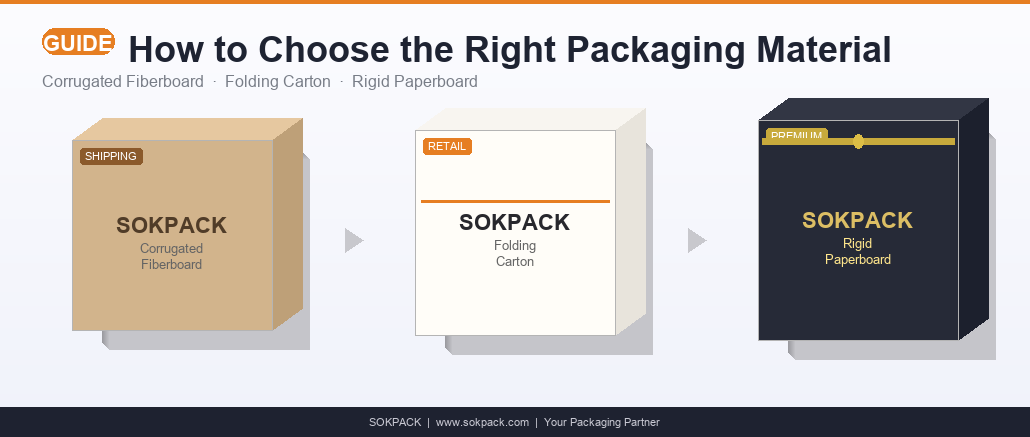
There are three dominant packaging materials used across industries today, each with distinct strengths and ideal use cases.
Material 01
Corrugated Fiberboard — The Workhorse of Packaging
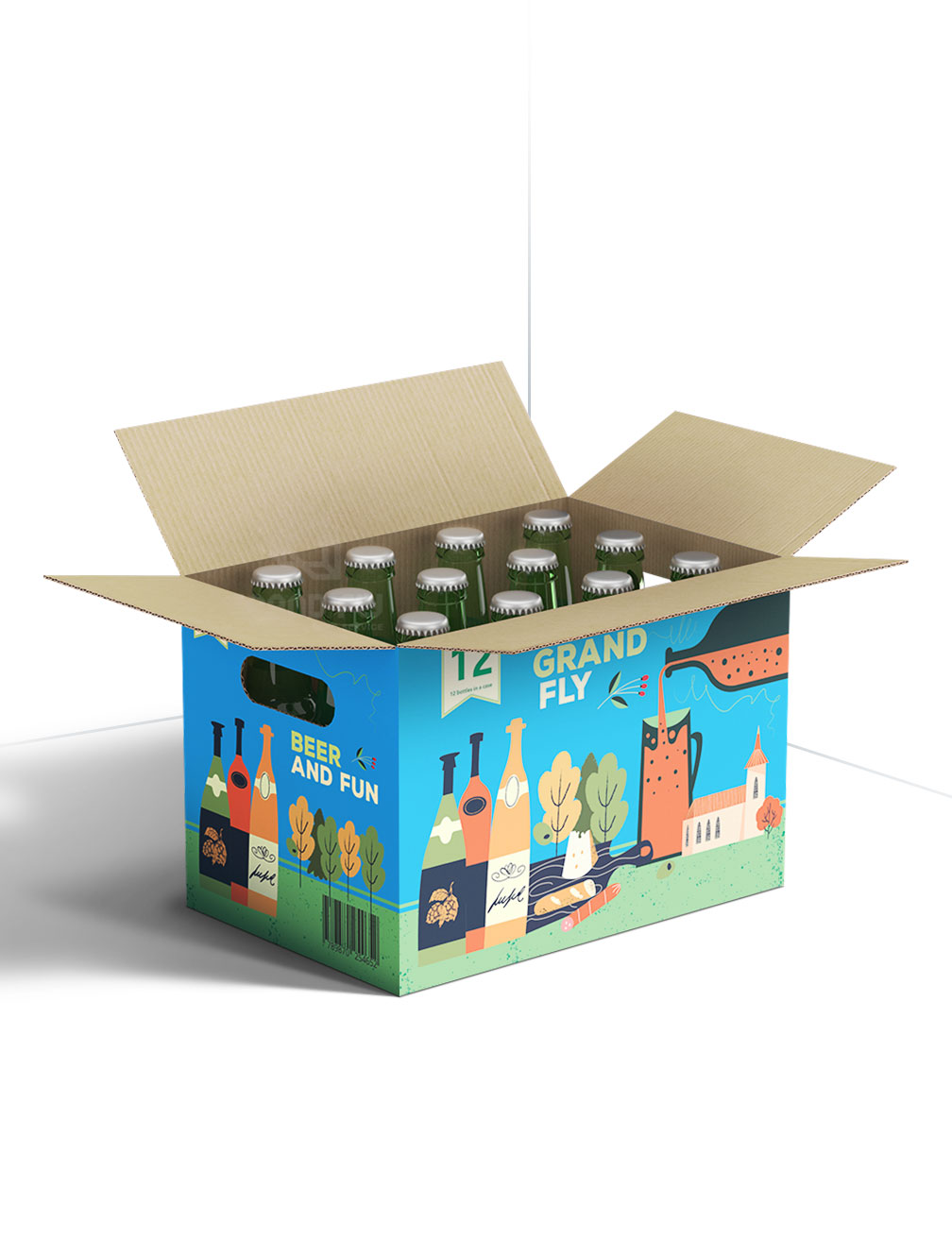
Corrugated fiberboard is the most widely used packaging material in the world. It consists of multiple layers of kraft paper with a distinctive fluted (wave-shaped) inner core that provides remarkable strength and cushioning.
✅High DurabilityFluted core absorbs impact during transit
✅LightweightHigh strength-to-weight ratio cuts shipping costs
✅Cost-EffectiveMost economical protective packaging solution
✅Highly CustomizableFull-color print, custom sizes, structural designs
✅Eco-FriendlyWidely recyclable; available in recycled kraft grades
✅VersatileSingle-wall, double-wall, triple-wall configurations
Best For: E-commerce, PDQ retail displays, fragile/heavy items, subscription boxes, bulk shipping
SOKPACK Corrugated Solutions: We offer custom corrugated boxes from standard RSC shippers to fully custom-printed corrugated PDQ displays — a popular choice for retail clients combining protective shipping with in-store visual impact.
Material 02
Folding Carton — Versatility for Retail-Ready Products
Folding cartons are the go-to solution for lightweight consumer products. Made from SBS, CUK, or recycled paperboard, they’re shipped flat and assembled at point of use — making them highly cost-efficient for retail applications.
✅Excellent Print QualityIdeal surface for offset, digital & specialty print
✅Rich Finish OptionsGloss/matte lamination, foil, spot UV, embossing
✅AffordableLower material and tooling costs
✅Eco-FriendlyEasily recyclable with PCR content options
⚠️Not for Heavy ItemsBest for products under 5–10 lbs
⚠️Humidity SensitivityRequires care in high-moisture environments
Best For: Cosmetics, pharma, food & beverage secondary packaging, electronics accessories, retail consumer goods
SOKPACK Folding Carton Solutions: Custom tuck-end boxes, gable-top, auto-bottom, sleeve packaging and more — with our in-house design team maximizing shelf appeal within your budget.
Material 03
Rigid Paperboard — The Premium Choice for Luxury Brands
Rigid boxes are the hallmark of luxury packaging. Unlike folding cartons, they arrive pre-assembled and maintain their shape permanently — constructed from thick chipboard wrapped in specialty paper, with each panel individually finished.
✅Premium AestheticsConveys high quality and luxury brand positioning
✅Unboxing ExperienceDrives social sharing and builds emotional connection
✅Extreme DurabilityResists crushing and deformation
✅Brand ElevationFoil, emboss, velvet lining, magnetic closure
⚠️Higher CostPremium unit price and longer lead times
⚠️Higher Freight CostNon-collapsible structure adds shipping weight
Best For: Luxury goods, gift packaging, premium electronics, subscription boxes, corporate gifting
SOKPACK Rigid Box Solutions: Magnetic closure boxes, lid-and-base, drawer boxes, and our collapsible rigid boxes — combining luxury aesthetics with logistics efficiency for DTC brands elevating their unboxing experience without the freight premium.
Step 4: Prioritize Sustainable Packaging
Sustainability is no longer a niche consideration — it’s a mainstream consumer expectation. Studies show a growing share of consumers actively prefer brands with visible sustainability commitments.
- Choose recyclable substrates — corrugated, folding carton, and rigid paperboard are all recyclable with water-based inks
- Specify PCR (Post-Consumer Recycled) content grades for your paperboard
- Avoid unnecessary plastic laminations — consider water-based coatings instead
- Right-size your packaging — smallest effective package reduces material use and shipping weight
- Explore FSC-certified materials for responsibly sourced fiber
“Sustainable packaging doesn’t mean less attractive packaging. At SOKPACK, we routinely produce fully recyclable packages that outperform plastic-heavy alternatives in both aesthetics and functionality.”
— SOKPACK Packaging Team | www.sokpack.com
Step 5: Design for an Unforgettable Unboxing Experience
In the age of social media, unboxing has become a powerful marketing channel. A single viral unboxing video can generate brand awareness that money can’t easily buy. Here’s how material selection intersects with unboxing experience:
- Choose structural integrity — select a material that maintains shape even after shipping
- Use premium finishing — spot UV or foil on key brand elements creates visual hierarchy
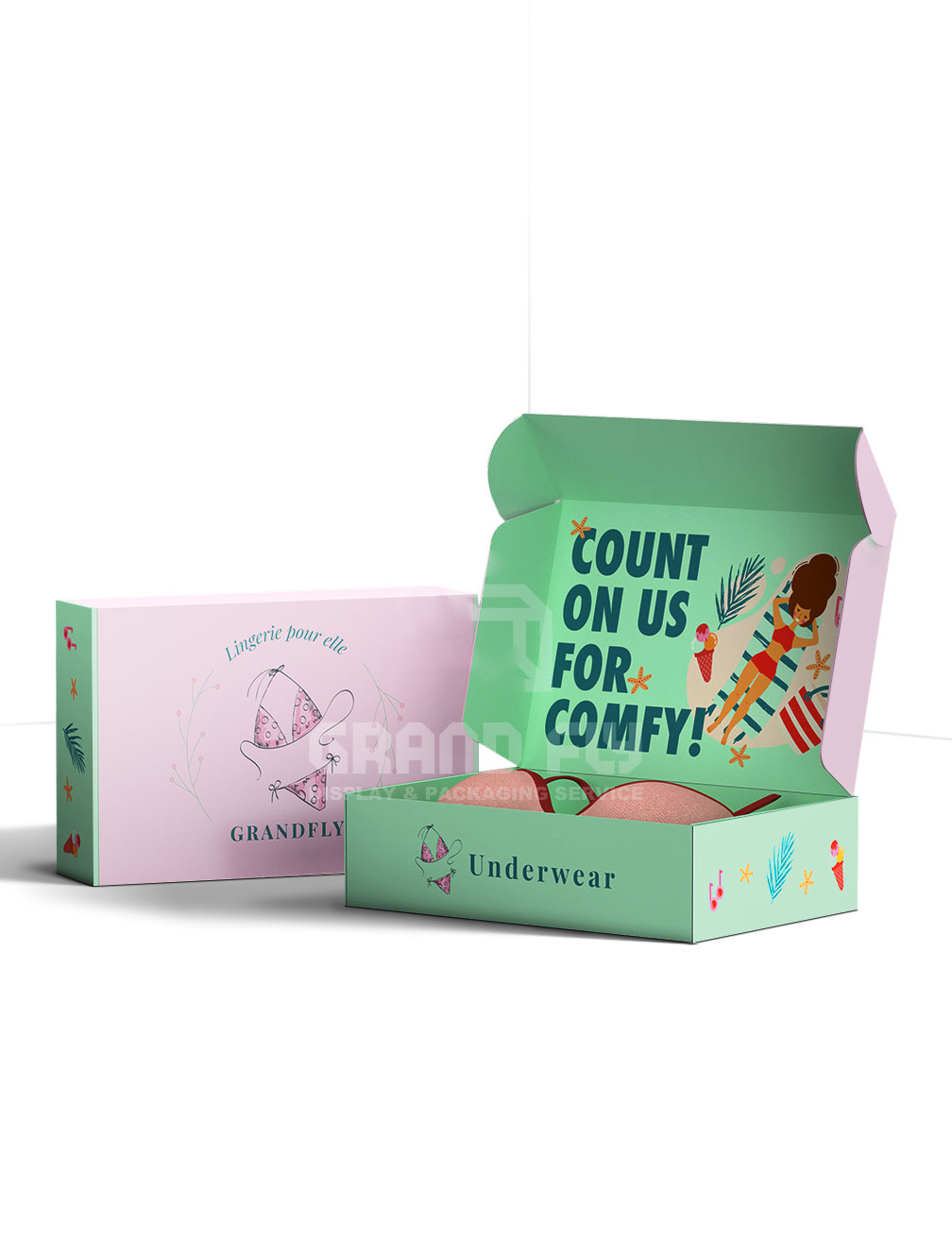
- Consider interior printing — a surprise element that delights customers on opening
- Size precisely — oversized packaging looks cheap regardless of material quality
- Add functionality — easy-open/re-close features enhance the customer experience
At SOKPACK, we offer structural dielines engineered to your exact product dimensions, eliminating unnecessary void space while maximizing the visual and tactile impact of your packaging.
Quick Comparison: Which Material Is Right for You?
| Criteria | Corrugated Fiberboard | Folding Carton | Rigid Paperboard |
|---|---|---|---|
| Cost | Low – Medium | Low – Medium | High |
| Durability | ⭐⭐⭐⭐⭐ | ⭐⭐⭐ | ⭐⭐⭐⭐⭐ |
| Print Quality | ⭐⭐⭐⭐ | ⭐⭐⭐⭐⭐ | ⭐⭐⭐⭐⭐ |
| Eco-Friendliness | ⭐⭐⭐⭐⭐ | ⭐⭐⭐⭐⭐ | ⭐⭐⭐⭐ |
| Luxury Appeal | ⭐⭐ | ⭐⭐⭐ | ⭐⭐⭐⭐⭐ |
| Unboxing Experience | ⭐⭐⭐ | ⭐⭐⭐ | ⭐⭐⭐⭐⭐ |
| Best Use Case | Shipping, E-commerce, PDQ | Retail, Consumer Goods | Luxury, Premium Gifting |
| SOKPACK Solution | Custom Corrugated Boxes & Displays | Custom Folding Cartons | Rigid & Collapsible Rigid Boxes |
How SOKPACK Can Help You Choose the Right Material
At SOKPACK (www.sokpack.com), we don’t just manufacture packaging — we partner with brands to engineer packaging that performs. Our end-to-end process:
-
Discovery & ConsultationWe learn your product, brand values, supply chain, and budget goals.
-
Material RecommendationOur engineers recommend the optimal substrate based on your specific requirements.
-
Structural DesignWe create custom structural dielines engineered precisely for your product.
-
Sample ProductionPhysical samples for your review before committing to full production.
-
Full Production & QCRigorous quality control at every stage of manufacturing.
-
Logistics SupportWe coordinate delivery to your warehouse or fulfillment center.
Frequently Asked Questions
Corrugated fiberboard is generally the most cost-effective choice for e-commerce due to its strength, low weight, and excellent printability. SOKPACK offers custom corrugated boxes in a wide range of sizes and print specifications.
Folding cartons alone are not recommended for direct shipping, as they lack structural rigidity to withstand transit forces. However, a folding carton inner box inside a corrugated outer shipper is a very common and effective combination.
Lead times vary by material and complexity. Corrugated and folding carton projects typically run 15–25 business days after sample approval. Rigid box projects generally require 20–35 business days. Contact us at www.sokpack.com for a project-specific timeline.
Yes. SOKPACK offers FSC-certified materials, PCR paperboard grades, and water-based ink printing across all product lines. We can help you quantify and meaningfully reduce your packaging’s environmental impact.
MOQs depend on product type and specifications. Please visit www.sokpack.com or contact our sales team directly for a custom quote tailored to your project.
Ready to Find Your Perfect Packaging?
Talk to the SOKPACK team today. We’ll help you select the right material, design the right structure, and deliver packaging that moves your brand forward.
 Premium custom rigid packaging solutions for brands worldwide.