
Collapsible Magnetic Gift Boxes: Foldable Rigid Box for Luxury Packaging

SHENZHEN, China — June 26, 2026​ — SOKPACK, a custom Collapsible Magnetic Gift Boxes manufacturer serving global beauty, jewelry, fragrance, and corporate gifting brands, today officially launches the expanded Collapsible Magnetic Rigid Box (Collapsible Magnetic Gift Boxes)​ series for international B2B buyers—a structural innovation purpose-built to eliminate the decades-old compromise between luxury presentation and logistics efficiency.

For premium brands selling across borders, traditional pre-assembled rigid boxes have long been a hidden profit killer. Because they cannot be flattened, overseas brands routinely pay dimensional weight (dim-weight) charges on “empty air,” while 3PL warehouses bill premium rates for pallet space consumed by unassembled inventory.

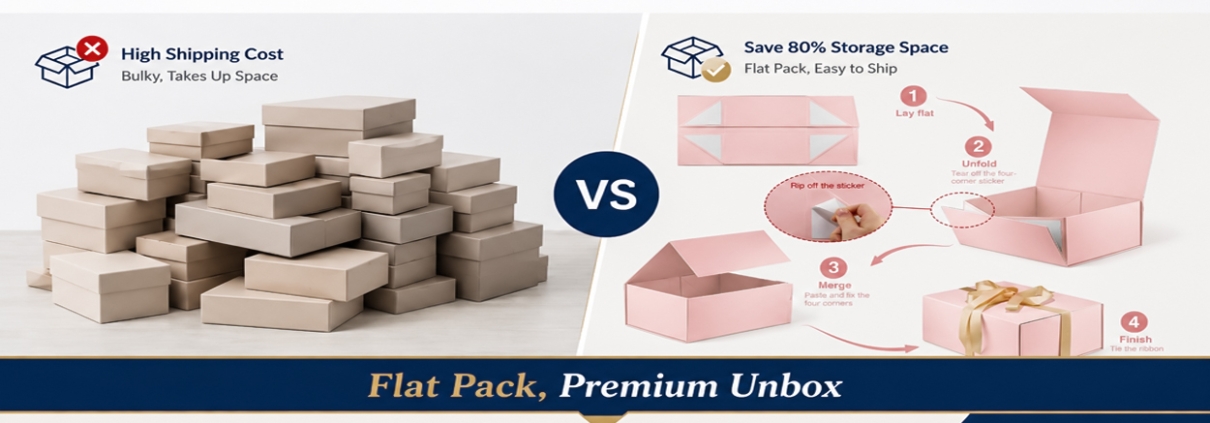
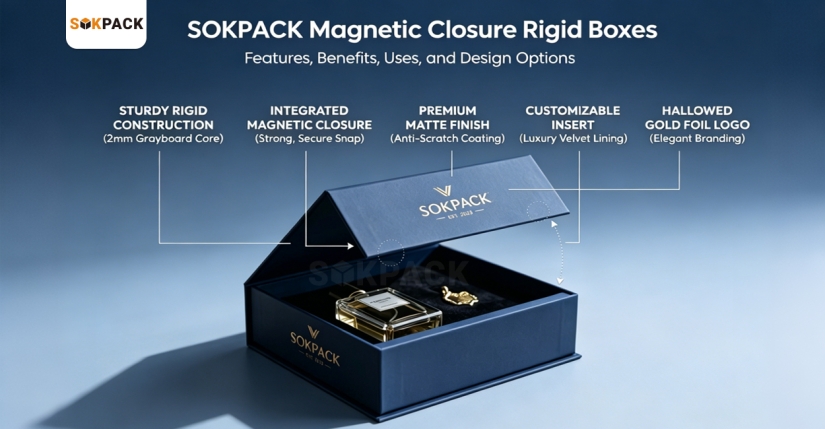
SOKPACK’s new Collapsible Magnetic Gift Boxes solve exactly this: engineered with precision V-groove scored corners and hidden neodymium magnets, the boxes ship and store completely flat—reducing volume by up to 70–80%​ and cutting ocean freight plus warehouse storage costs by an average of 30–40%. Upon arrival, a packer or end customer simply pulls the side panels upward; the box snaps into a rigid, structurally intact three-dimensional form in under 3 seconds—no glue, no tape, no tools required.

“We heard the same complaint from DTC beauty and jewelry founders again and again: ‘We love the magnetic rigid box unboxing, but shipping 10,000 of them from Asia is financially painful.’ Our collapsible magnetic rigid box was born from that feedback. It delivers the identical magnetic ‘click,’ the same 1000–1500gsm board stiffness, and full custom finishes—foil stamping, spot UV, blind deboss—while removing the penalty of shipping pre-built boxes. Luxury packaging shouldn’t cost you twice,” said the SOKPACK Product Development Team.

Table of Contents

Structural Engineering & Craftsmanship

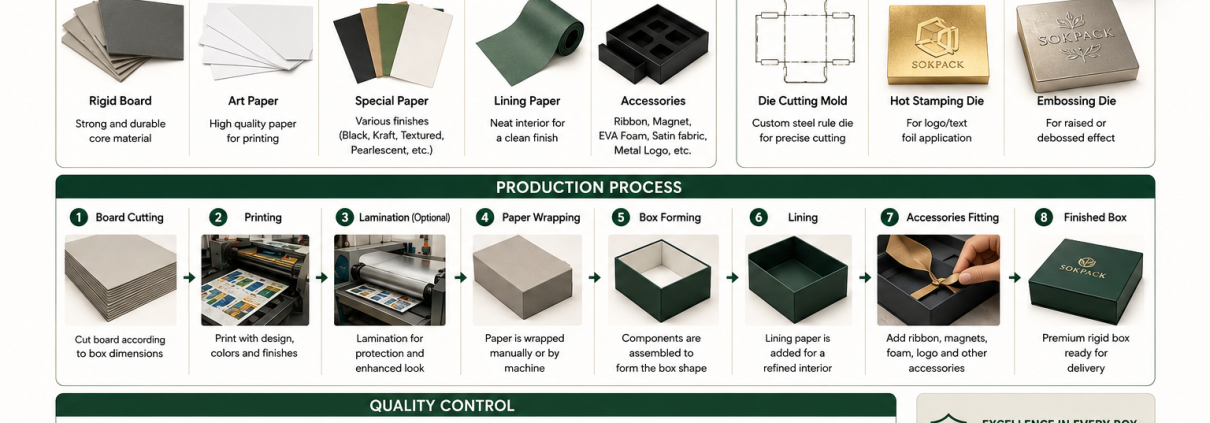
SOKPACK Collapsible Magnetic Gift Boxes start with high-density greyboard (1000 / 1200 / 1500 gsm options) wrapped in premium art paper, textured linen-look paper, leatherette, or FSC-certified kraft. Unlike cheap folding cartons, the board is rigid enough to protect glass perfume bottles, watches, or delicate cosmetics. The breakthrough lies in CNC-controlled V-groove cutting​ along all four interior side joints: this allows the board-and-wrap assembly to collapse flat without cracking the outer wrap paper, then re-open to perfect right-angle alignment every time. Industrial-grade neodymium magnets are invisibly embedded in the lid flap and corresponding front panel, calibrated for a smooth, self-guiding closure that produces the signature premium “snap” sound​ customers associate with high-end gifting.

Post-assembly, the Collapsible Magnetic Gift Boxes passes SOKPACK’s drop-test and compression-resistance QC. It stands up to repeated open/close cycles without loosening—meaning recipients often reuse it as a keepsake box, extending brand visibility on the dresser or shelf long after purchase.

Quantified Logistics Advantage

Metric Traditional Rigid Box (Pre-assembled) SOKPACK Collapsible Magnetic Rigid Box
Shipping Volume 100% (full 3D) ~20–30% (flat-packed)
Units per Master Carton Baseline 4–6× more
Ocean Freight Dim-weight Cost Baseline ↓ 30–40%
Monthly Pallet Storage @ 3PL Baseline ↓ up to 75%
Assembly Time (per unit) N/A (pre-built) < 3 seconds, tool-free
Recyclability Varies 100% recyclable mono-board optional (FSC available)

For a brand importing 20,000 Collapsible Magnetic Gift Boxes per season, switching to SOKPACK’s fold-flat magnetic boxes can mean downsizing from 18 ocean-freight pallets to just 4–5, freeing capital tied up in freight and warehouse rent—a compelling ROI even before factoring in the branding uplift of a luxury unboxing experience.

Full Customization for Brand Differentiation

The collapsible structure in no way limits creative expression. SOKPACK offers:

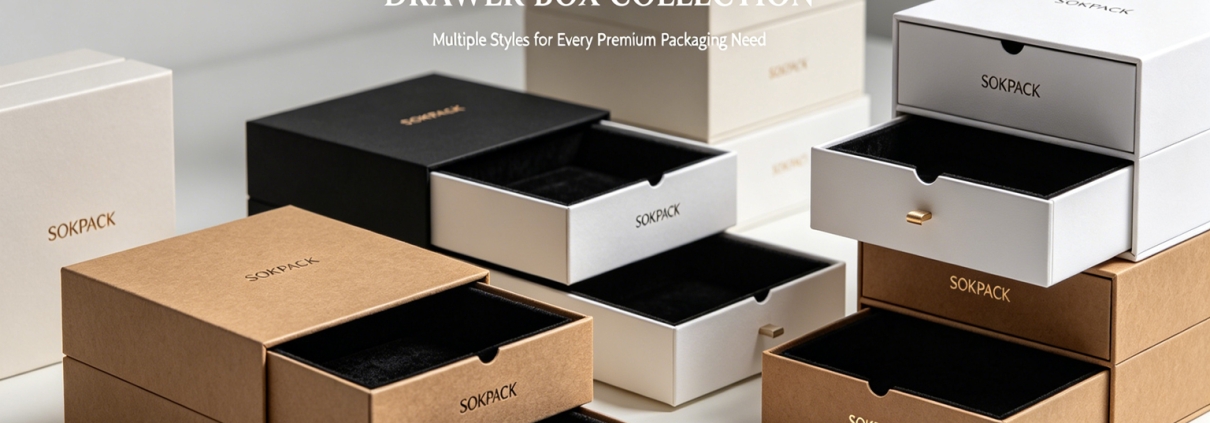
Size & Shape​ — Lid-and-base, book-style flip, or two-piece drawer hybrid; fully custom internal dimensions to cradle your product.

Print & Finish​ — Offset CMYK / Pantone spot colour; matte / gloss / soft-touch lamination; gold & silver hot foil stamping; spot UV; registered embossing/debossing; silk ribbon pulls.

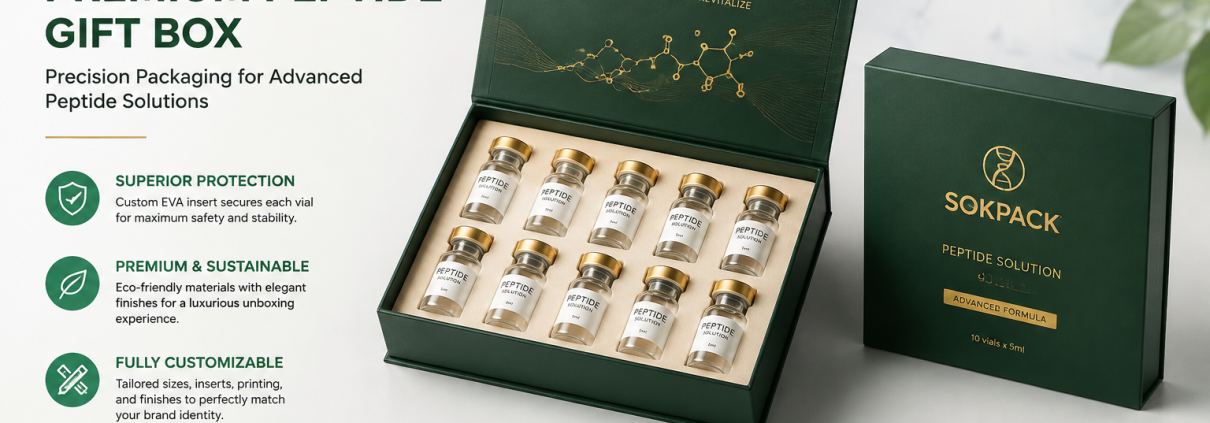
Inserts​ — Die-cut cardboard platforms, molded pulp, EVA foam, or velvet-lined trays to secure bottles, jars, jewelry, or electronics.

Sustainability Options​ — FSC®-certified board, soy/vegetable-based inks, plastic-free all-paper magnetic catch (no PVC windows), 100% mono-material for curb-side recyclability.

Ideal Applications

Beauty & Skincare​ — Serum/cream gift sets, holiday limited-edition palettes.

Fine Jewelry & Watches​ — Ring/necklace presentation boxes with velvet insert.

Fragrance & Candles​ — Scented candle gift boxes with branded interior printing.

Fashion Accessories​ — Silk scarf, tie, or small leather goods presentation.

Corporate Gifting & Events — Employee onboarding kits, VIP client appreciation boxes, tradeshow welcome packs.

Subscription / Curated Boxes — Where flat-packed inbound saves significant 3PL inbound receiving fees.

Availability & Services

The SOKPACK Collapsible Magnetic Rigid Box line is available with Low MOQ​ (starting from 300–500 pcs depending on specs), supports DDP shipping to US / EU / UK / AU, and includes:

✅ Free structural dieline (CAD / PDF / AI) for your designer

✅ Physical pre-production sample (3–5 working days after artwork confirmation)

✅ ISO-certified factory QC on magnet alignment, wrap adhesion & colour matching

✅ Flexible lead time: 12–20 days standard production + transit

Black, white, kraft, and PMS-custom wrapped covers are stocked for rapid sampling.

About SOKPACK

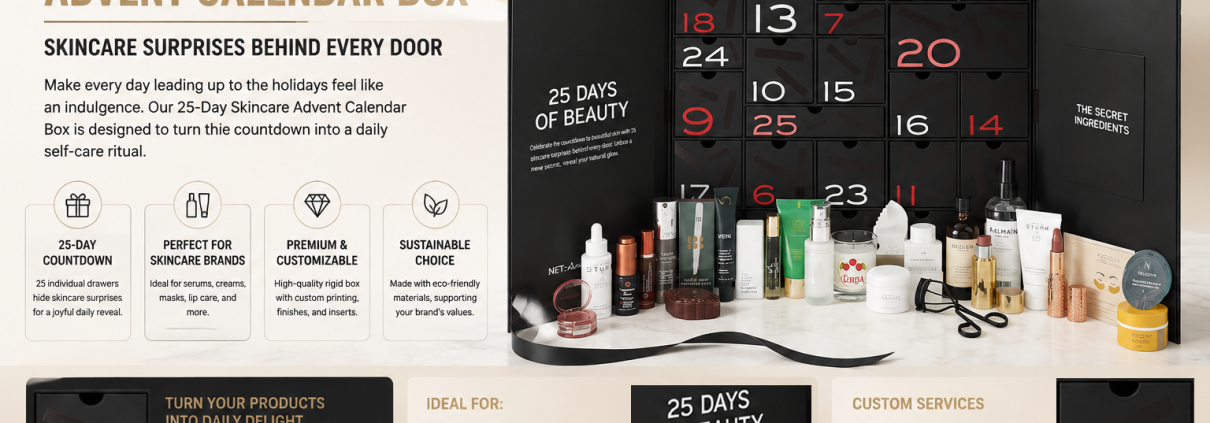
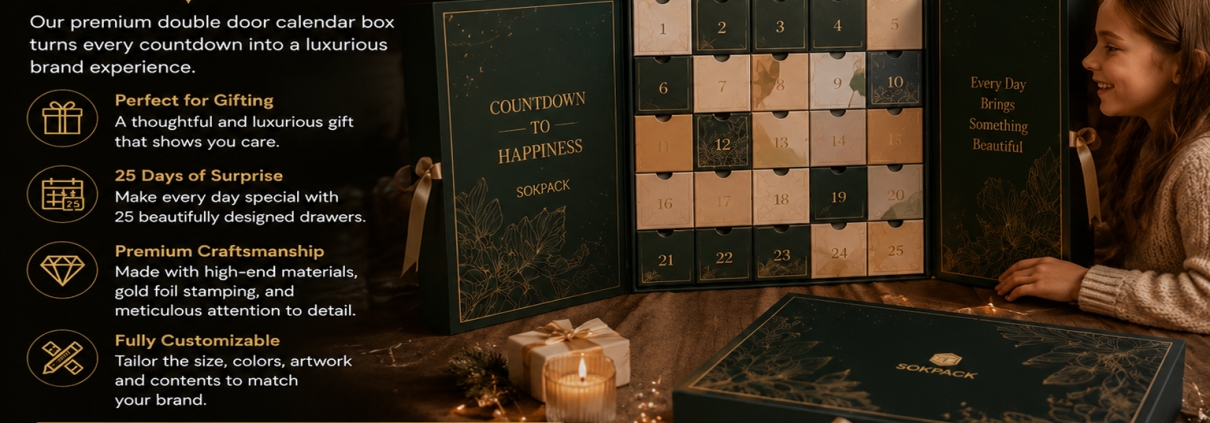
SOKPACK is a Shenzhen-based custom packaging manufacturer established in 2012, specializing in rigid gift boxes, Collapsible Magnetic Gift Boxes, drawer boxes, Advent calendars, and eco-luxury packaging for global B2B clients. With two wholly-owned production facilities, Heidelberg printing presses, and FSC-certified material sourcing, SOKPACK helps emerging and established brands balance aesthetics, sustainability, and supply-chain efficiency. Learn more or request a sample at https://sokpack.com

Media & Business Inquiries:

📧 info@sokpack.com

🌐 https://sokpack.com

📦 Sample requests accepted globally — quote within 2 hours during business days.

Dragon Boat Festival 2026: Traditions, Gift-Giving & Custom Packaging Ideas

On June 19, 2026, over a billion people across China and East Asia will celebrate one of the world’s oldest cultural festivals — the Dragon Boat Festival (端午节, Duanwu Festival). Recognized by UNESCO as an Intangible Cultural Heritage, this 2,300-year-old tradition is far more than dragon boat races and sticky rice dumplings. It’s one of the most important gift-giving occasions in the Chinese calendar — and for packaging professionals, a significant commercial opportunity.

In this guide, we’ll explore the festival’s rich traditions, explain why gift-giving matters during Duanwu, and show you how to design custom gift packaging that captures the spirit of this ancient celebration.

1. What Is the Dragon Boat Festival?

The Dragon Boat Festival — also called Duanwu Festival (端午节) or Double Fifth Festival — falls on the 5th day of the 5th month of the Chinese lunar calendar. In 2026, that’s June 19, with a three-day public holiday from June 19–21.

The Legend of Qu Yuan

The festival’s most famous origin story dates back to 278 BC. Qu Yuan (屈原), a beloved poet and loyal minister of the Chu Kingdom, was exiled after political rivals slandered him. When he learned that his homeland had fallen to the rival state of Qin, he drowned himself in the Miluo River in despair.

According to legend, the local people rushed out in boats to search for his body — the origin of dragon boat racing. They threw rice dumplings into the river to keep the fish from eating his body — the origin of zongzi. And a doctor poured realgar wine into the water to ward off river creatures — the origin of the tradition of drinking realgar wine.

“The Dragon Boat Festival was inscribed on UNESCO’s Representative List of the Intangible Cultural Heritage of Humanity in 2009 — the first Chinese festival to receive this honor.”

Beyond the Qu Yuan legend, the festival also has deeper roots as an ancient summer solstice ritual — a time to ward off disease and misfortune as the hot, humid months brought epidemics in pre-modern China. Many of the festival’s customs — hanging mugwort, wearing sachets, tying five-color threads — are protective rituals that predate the Qu Yuan story by centuries.

2. 5 Key Traditions You Should Know

① Eating Zongzi (粽子)

Zongzi — glutinous rice wrapped in bamboo or reed leaves and stuffed with savory or sweet fillings — is the festival’s signature food. Regional preferences vary dramatically:

  • Northern China: Sweet zongzi with red date (jujube), red bean paste, or honey
  • Southern China: Savory zongzi with pork, salted egg yolk, Jinhua ham, or mushrooms
  • Export markets: Fusion flavors like matcha, chocolate, and even truffle are gaining popularity

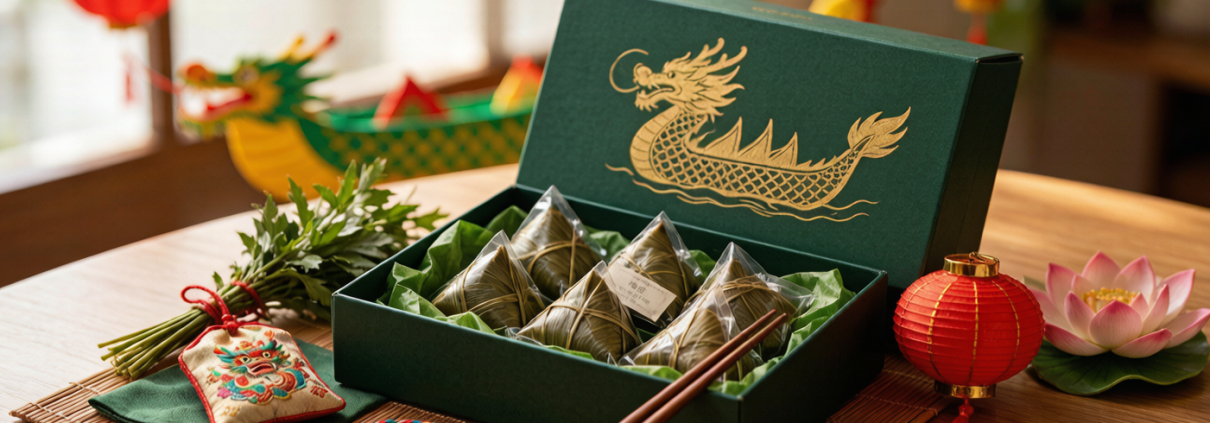
The packaging of zongzi gift boxes has evolved into an art form — from simple cellophane wraps to luxury rigid boxes with gold foil detailing.

② Dragon Boat Racing (赛龙舟)

Teams of paddlers race in long, ornately decorated boats shaped like dragons. What began as a ritual to search for Qu Yuan’s body is now an international sport, with races held in over 50 countries worldwide. The boats are typically 12–30 meters long, with a carved dragon head at the bow and a tail at the stern.

③ Hanging Mugwort and Calamus (挂艾草菖蒲)

People hang bundles of mugwort (艾草) and calamus (菖蒲) above doorways to ward off insects and evil spirits during the disease-prone summer months. Both plants have natural insect-repellent properties — an ancient form of pest control wrapped in cultural meaning.

④ Wearing Perfumed Sachets (佩香囊)

Small, embroidered silk pouches filled with aromatic herbs like mugwort, lavender, and cloves are worn or given as gifts. Traditionally made by grandmothers for children, modern sachets have become stylish accessories and popular gift items.

⑤ Tying Five-Color Silk Threads (系五彩丝线)

Parents tie braided silk threads in five colors (red, yellow, blue, white, black — representing the five elements) around children’s wrists and ankles for protection. The threads are later thrown into the first summer rain, symbolically carrying away illness and bad luck.

3. Why Gift-Giving Matters at Duanwu

In Chinese culture, the Dragon Boat Festival is one of the “Four Major Gift-Giving Festivals” alongside Spring Festival, Mid-Autumn Festival, and Qingming. Here’s why it matters for your brand:

The Numbers: During the 2025 Dragon Boat Festival, China’s zongzi gift box market exceeded ¥12 billion ($1.65 billion) in retail sales, with premium gift boxes (priced above ¥200/$28) growing at 18% year-over-year. The total festival gifting market — including food, health products, and lifestyle items — surpassed ¥35 billion ($4.8 billion).

Who Gives — and Who Receives?

Giver Recipient Typical Gift Box Contents Price Range
Corporations Clients & Partners Premium zongzi + tea + sachet ¥200–800 ($28–110)
Companies Employees Zongzi set + seasonal fruit ¥80–300 ($11–42)
Individuals Parents & Elders Health-focused zongzi + supplements ¥100–500 ($14–70)
Friends Friends Novelty zongzi + snacks ¥50–200 ($7–28)
Luxury Hotels Hotel Guests Artisan zongzi + premium tea ¥300–1,000+ ($42–140+)

The Unboxing Factor

For younger Chinese consumers, the packaging is often as important as the contents. A beautifully designed zongzi gift box becomes a social media statement — shared on Xiaohongshu (Little Red Book), WeChat Moments, and Douyin. This “unboxing economy” drives demand for innovative, Instagram-worthy packaging that tells a cultural story.

4. Dragon Boat Festival Gift Packaging Ideas

Idea 1: The “Cultural Storyteller” Box

Design a rigid gift box that unfolds the story of Qu Yuan through layered imagery. The outer sleeve features a dragon boat motif in gold foil; inside, a printed insert tells the legend in both English and Chinese. Each compartment holds a different zongzi flavor, with tasting notes like a wine box.

Best for: Luxury hotels, premium food brands, cultural institutions

Idea 2: The “Five Blessings” Drawer Box

A five-drawer rigid box, where each drawer represents one of the five Duanwu traditions (zongzi, dragon boat, mugwort, sachet, five-color thread). Drawers can contain zongzi, a small sachet, a packet of mugwort tea, a silk bracelet, and a festival card. The number five carries deep cultural significance in Chinese numerology.

Best for: Corporate gifting, employee appreciation sets

Idea 3: The “Zongzi Boat” Shape Box

A custom-shaped rigid box modeled after a dragon boat, with a lid that opens to reveal rows of individually wrapped zongzi in shaped compartments. This novelty structure creates instant shelf appeal and social media buzz.

Best for: B2C retail brands, gift shops, tourism markets

Idea 4: The Eco-Minimalist Box

A simple kraft or Tyvek paper box with minimalist printing — perhaps just a single line-drawn dragon boat in green soy-based ink. Inside: biodegradable compartments holding organic zongzi. This approach aligns with the growing demand for sustainable festival packaging and resonates with environmentally conscious consumers.

Best for: Health-focused brands, eco-conscious companies, export markets

5. Best Box Structures for Zongzi Gift Sets

Box Structure Key Features Ideal For Price Range (per box)
Drawer Rigid Box Multiple pull-out drawers, premium feel Multi-item gift sets, corporate gifts $1.80–4.50
Lid & Base Box Classic, generous interior space Standard zongzi sets (4–8 pieces) $1.20–3.00
Magnetic Closure Box Flap with magnetic clasp, elegant unboxing Premium single-brand gifts $1.50–3.80
Foldable Rigid Box Flat shipping, easy assembly Export orders, cost-sensitive projects $0.90–2.20
Double-Door Box Two side-opening doors, theatrical reveal Luxury multi-brand collaborations $2.50–5.50
Custom Shape Box Boat shape, zongzi-tetra shape, etc. Novelty gifts, limited editions $3.00–8.00+

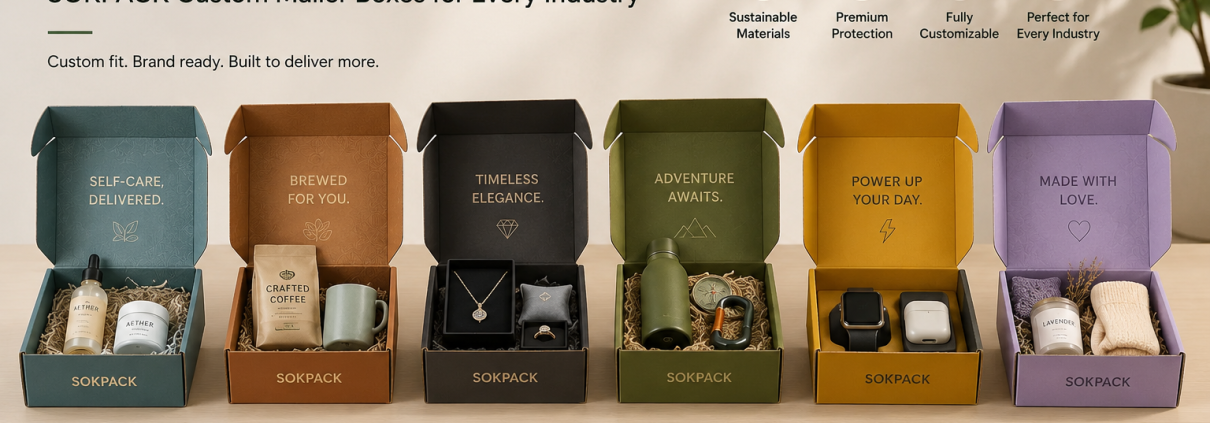
Six types of Dragon Boat Festival gift box structures including drawer box, lid and base box, magnetic closure box, foldable rigid box, double-door box, and custom boat-shaped box

Six gift box structures ideal for Dragon Boat Festival packaging — from drawer to custom boat shape

6. Design Elements That Sell: Colors, Motifs & Finishes

Festival Color Palettes

Color Theme Colors Mood Best For
Classic Duanwu Deep green + gold + cream Traditional, respectful, heritage Corporate gifts, hotel partnerships
River Mist Aqua blue + silver + white Contemporary, serene, premium Luxury brands, wellness products
Imperial Dragon Red + gold + black Bold, festive, auspicious B2C retail, tourism souvenirs
Bamboo Heritage Natural kraft + sage green + copper Eco, artisanal, earthy Organic brands, sustainable positioning
Silk Road Blush pink + jade + ivory Feminine, modern, gift-worthy Lifestyle brands, social media appeal

Iconic Motifs

  • Dragon boat silhouette — the festival’s most recognizable symbol
  • Zongzi tetrahedron shape — iconic and immediately identifiable
  • Bamboo leaves — natural, textural, and culturally authentic
  • Qu Yuan calligraphy — literary sophistication for premium positioning
  • Mugwort & calamus — botanical elegance, health and protection symbolism
  • Five-color threads — a charming motif for family-oriented gifts

Premium Finishes

  • Gold foil stamping — For logos, boat motifs, and blessing text. The #1 requested finish for festival boxes.
  • Spot UV coating — Creates contrast on matte backgrounds; makes dragon scales or water ripples pop.
  • Embossing/Debossing — Adds tactile depth to bamboo leaf patterns or calligraphy.
  • Soft-touch lamination — Velvety feel that signals premium quality the moment customers touch the box.
  • Inner printing — Don’t waste the inside! Print Qu Yuan’s poetry or festival greetings on the box interior.

7. Sustainable Packaging for the Modern Festival

Sustainability is reshaping festival gifting in China. In 2025, 62% of Chinese consumers said they prefer eco-friendly festival packaging, even at a 10–15% price premium (source: China Packaging Federation). Here are the key sustainable options:

Materials

  • FSC-certified grey board — The structural core of rigid boxes, now available with full chain-of-custody certification
  • Recyclable kraft paper — For outer wraps and sleeves; natural texture aligns with bamboo leaf aesthetics
  • DuPont Tyvek paper — Durable, water-resistant, and fully recyclable; used by Four Seasons Beijing for their 2025 zongzi gift box
  • Bamboo fiber board — A thematic material choice that directly connects to the zongzi wrapping tradition
  • Soy-based inks — Replace petroleum-based inks with renewable, low-VOC alternatives

Second-Life Design

The most innovative festival boxes are designed for reuse after the festival. A rigid drawer box that held zongzi can become a jewelry organizer. A double-door box transforms into a desktop storage unit. This “second life” approach extends brand visibility and reduces waste — a win-win for brands and the planet.

💡 Pro Tip: Include a printed insert showing 3 creative ways to repurpose the box after the festival. This simple addition boosts perceived value, encourages social sharing, and positions your brand as sustainability-forward.

8. Production Timeline: When to Order

Because the Dragon Boat Festival date shifts each year (it follows the lunar calendar), planning ahead is essential. Here’s a recommended timeline:

Phase Timeline Key Actions
Concept & Design February – March Finalize theme, structure, artwork, and materials
Prototyping March – early April Sample production, structural testing, design revision
Bulk Production Mid-April – May Mass production, quality control, finishing
Fulfillment & Shipping Late May – early June Packing, domestic/international shipping
Retail Launch Early-mid June Products on shelves 1–2 weeks before the festival

For 2027: The Dragon Boat Festival falls on June 9, 2027. We recommend starting the design conversation by January 2027 to ensure on-time delivery.

🎁 Ready to Create Your Dragon Boat Festival Gift Box?

From concept sketches to delivered boxes — SOKPACK handles it all. 15+ years of OEM/ODM expertise, FSC-certified materials, and 24-hour quoting. Get a Free Quote →
 

World Cup 2026 Corporate Gift Packaging: Complete Guide for Brands

The FIFA World Cup 2026™ is already underway — 48 teams, 104 matches, and an estimated 5 billion global viewers. For brands and B2B companies, that kind of cultural moment creates a rare alignment: your clients and partners are all watching, feeling, and sharing the same experience at the same time.

Corporate gifting during the World Cup isn’t a gimmick. It’s strategic brand investment in a moment of peak emotional engagement. A thoughtfully packaged World Cup gift box lands on a desk during a week when your client is already talking about football — it’s contextual, timely, and memorable in a way that a standard “thank you” hamper simply cannot replicate.

This guide is written for marketing managers, procurement teams, and brand managers who want to execute a World Cup 2026 corporate gifting program — from concept to delivery — efficiently and cost-effectively.

27% Higher response rate in follow-up sales after a physical gift

70% Better retention vs. email: branded physical packaging stays longer

5B+ World Cup viewers — peak emotional engagement window

37 days Remaining tournament window to capitalize on (until July 19)

1. Why Corporate Gifting Works During the World Cup

Most corporate gifts arrive in a vacuum — a generic hamper at year-end, indistinguishable from the 10 others your client received that week. World Cup gifts are different. They arrive with built-in cultural context.

When you send a beautifully packaged World Cup gift box on the day of a major match, three things happen that don’t happen with ordinary gifting:

  • Immediacy: The gift is relevant right now, not “whenever you get around to opening it.” The recipient knows exactly why it’s there.
  • Social sharing: Sports emotion and beautiful packaging combine into a highly shareable moment. Unboxing a premium World Cup gift set in the office generates organic conversation.
  • Emotional anchoring: Your brand becomes associated with the positive emotions of the tournament. When your client remembers that incredible match, they’ll also remember your gift.
  • Key Insight: The most impactful timing windows are Round of 16 (June 28 – July 2)Quarterfinals (July 4–5), and Finals Week (July 15–19). Target delivery to coincide with match days for your client’s country or favorite team.

2. Who to Send Gift Boxes To

Before you budget and design, identify your target recipients. World Cup corporate gifts work across multiple audiences, each requiring a different approach:

Recipient Group Gifting Goal Recommended Tier Timing
Key Clients / Accounts Relationship deepening, renewal momentum Premium ($50–$80/box) Round of 16 / Quarterfinals
Prospective Clients Pipeline acceleration, brand recall Mid-range ($20–$40/box) Tournament kickoff / Group stage
Business Partners Partnership appreciation, co-promotion Mid-range ($25–$50/box) Any major match week
Employees Morale boost, brand culture Budget-friendly ($10–$25/box) Tournament kickoff
Influencers / Media Content seeding, organic reach Premium ($60–$100/box) Kickoff or First match week

Pro Tip: For key clients in host countries (USA, Canada, Mexico), consider country-specific packaging — a red-white-blue box for US clients, a green-white-red box for Mexican partners. This hyper-local personalization shows cultural awareness and dramatically increases the emotional impact.

3. Gift Box Tiers & Budget Guide

Corporate gift boxes exist across a wide price range. Here’s a practical framework based on 2026 supplier pricing and contents cost:

🥇 Premium Tier

$50–$100

Per box, incl. contents at 500+ units

  • Rigid magnetic lid box with foil stamping
  • Soft-touch lamination + embossed logo
  • Premium insulated tumbler
  • Artisan chocolate set
  • Branded notebook + pen set
  • Enamel keepsake pin
  • Personalized message card

🥈 Mid-Range Tier

$20–$45

Per box, incl. contents at 500+ units

  • Rigid box with matte lamination
  • Spot UV logo accent
  • Branded ceramic mug
  • Snack or candy set
  • Branded tote or cap
  • World Cup schedule card

🥉 Budget Tier

$10–$20

Per box, incl. contents at 1,000+ units

  • Folding carton or kraft box
  • Branded glossy sleeve
  • Football-themed chocolates or candy
  • Branded cap or bandana
  • Mini stationery set

Total Program Budget Estimation

Recipients Budget Tier Total Mid-Range Total Premium Total
100 boxes $1,000–$2,000 $2,000–$4,500 $5,000–$10,000
500 boxes $5,000–$10,000 $10,000–$22,500 $25,000–$50,000
2,000 boxes $20,000–$40,000 $40,000–$90,000 $100,000–$200,000

4. Design Principles for Corporate Gift Packaging

Corporate gift boxes have one primary design constraint that consumer packaging doesn’t: the brand must be visible, but the gift must not feel like advertising. Here’s how to get that balance right:

Rule 1: Logo Prominence Without Dominance

Your company logo should appear on the exterior lid and at least one interior surface, but it shouldn’t overwhelm the World Cup theme. A good ratio: 30% brand identity, 70% World Cup mood. This feels like a gift, not a promotional item.

Rule 2: Match Energy Drives Color Choice

Use football’s energy palette — deep pitch green, trophy gold, stadium night navy, or host nation colors — as your background canvas. Overlay your brand colors as accents rather than the dominant color. A navy box with gold foil and your logo in white feels premium and football-right simultaneously.

Rule 3: Texture Tells the Story

For premium recipient tiers, the tactile experience matters as much as the visual. Soft-touch matte lamination makes a box feel intentional. Combine with an embossed logo on the lid — the moment your client picks up the box and feels the quality, before they’ve even opened it, they’ve received a message about how you value the relationship.

Rule 4: Interior Matches Exterior

Don’t let the interior contradict the exterior. If the box is premium, the interior lining, tissue color, and insert material must match. Standard checklist: custom-color tissue paper, branded ribbon pull, foam or molded pulp insert in team colors, and a card printed to match the exterior palette.

Design Direction: The most universally effective corporate World Cup box for 2026 is a deep navy rigid box with gold foil World Cup trophy silhouette on the lid, soft-touch matte exterior, white embossed company logo on the side panel, and green tissue paper interior. Works for any client, any industry, any country.

5. Contents Recommendations by Audience

The contents of your gift box should reflect what your recipient will use, display, or consume — not what’s cheapest to source. Here’s a curated guide by recipient type:

For C-Suite Executives (Premium)

  • 🥃 Premium branded whiskey glass set or wine glasses (2 pieces)
  • 🍫 Single-origin artisan chocolate box, football-panel print wrap
  • ⌚ Leather-bound desk set (cardholder + notepad + pen)
  • 🏆 Replica World Cup trophy desk miniature (branded base)
  • ✉️ Handwritten personalized card from your CEO

For Marketing & Creative Teams (Mid-Range)

  • ☕ Branded specialty coffee set with World Cup packaging
  • 📓 A5 hardcover notebook with foil logo
  • 🎨 Limited edition branded tote bag
  • 🍬 Colorful candy mix in team colors (US/Mexico/Canada)
  • 📱 Branded PopSocket or phone stand

For Large Workforce Distributions (Budget-Friendly)

  • 🧢 Branded cap or fan bandana
  • ⚽ Mini foam football
  • 🍭 Football-shaped chocolates (3–5 pieces)
  • 📋 World Cup bracket card (fill-in predictions)
  • 🎉 Branded sticker pack

6. Personalization & Variable Data Printing

The most powerful upgrade for corporate gift boxes is personalization — and modern manufacturing makes it more accessible than most procurement managers realize.

Here are three levels of personalization, from basic to advanced:

  1. Recipient Name Card (Most Common): Print a personalized “Dear [Name]” card for each box using variable data digital printing. Supply the factory with a spreadsheet; they produce individual cards. Cost: $0.30–$0.80/unit extra. Maximum emotional impact for minimum cost.
  2. Regional Box Variants (Intermediate): Print 2–3 exterior box variants aligned to recipient locations. USA clients get red-white-blue boxes; Mexico contacts get green-white-red. Requires 2–3 separate SKUs but is manageable at 200+ units per variant.
  3. Fully Custom Per-Box Printing (Advanced): Digital printing allows true one-off customization — recipient name, company name, or even a personalized message on the box exterior itself. Typically feasible at 100+ units with digital printing partners. Cost premium of $1.50–$3.00/unit but creates extraordinary differentiation.

Low-Cost High-Impact Hack: Even for standard printed boxes, add a QR code on the interior base that links to a personalized video message from your team. Record one per major client segment (e.g., “For our North America partners” / “For our friends in Europe”). Cost: $0. Impact: unforgettable.

7. Logistics: Production & Delivery Timeline

With the World Cup running until July 19, 2026, here’s a realistic production and delivery roadmap starting from today, June 12:

Action Timeline Notes
Brief finalization + supplier quote June 12–14 Define structure, size, qty, design direction
Design approval + dieline confirmation June 14–17 Most factories provide template within 24hrs
Digital 3D mockup approval June 17–18 Skip physical sample to save time
Rush production (folding carton) June 18 – July 2 ~15 days; +15% rush fee typical
Rush production (rigid box) June 18 – July 8 ~20 days; +20% rush fee typical
Air freight to USA / Europe +5–7 days after production Add 2–3 days for customs
Expected arrival (rigid box) July 13–16 In time for the FIFA World Cup Final (July 19) 🏆

Don’t wait: Every day of delay is one day less tournament window. If you want boxes for the Quarterfinals (July 4–5), you need production confirmed by June 16 for folding cartons or June 13 for rush rigid boxes. Contact your packaging supplier today.

8. Four Mistakes That Kill Corporate Gift ROI

Mistake 1: Generic Contents in Premium Packaging

A $15 box of chocolates in a $7 rigid box sends a mixed message. Align contents quality with packaging quality. If your box is premium, every item inside must feel premium too — even if that means fewer items.

Mistake 2: Forgetting the Interior Experience

Most procurement managers approve the box exterior and forget about the interior. But when your client opens the box, the interior is the first thing they see. White tissue and brown inserts in a beautiful navy box feel like a let-down. Budget 10–15% of your packaging cost for interior tissue, insert, and card quality.

Mistake 3: Ordering Too Early Without Flexibility

Ordering 2,000 boxes identical to each other, then realizing three weeks in that you want to add 500 for a new client segment — is expensive. Order your core batch, but reserve 10–15% of production capacity as flex stock (plain or semi-customized boxes you can quickly finish).

Mistake 4: No Distribution Plan

The box is ready, sitting in a warehouse. Now what? Building the distribution logistics (courier accounts by country, recipient data, address verification, customs documentation for international sends) is a project unto itself. Start planning distribution as soon as production is confirmed.

Frequently Asked Questions

What makes a good World Cup corporate gift box?+
How much should a corporate World Cup gift box cost per unit?+
Can I include a personal message or variable data in each gift box?+
What is the best timing to send World Cup corporate gifts?+
What is the ROI of corporate gift boxes for B2B companies?+

Launch Your World Cup Corporate Gift Program Today

SOKPACK’s team can deliver a 3D mockup and full quote within 24 hours. Rush production available — the final is July 19. Let’s make it happen.

Get 24-Hour Quote →

SOKPACK Packaging Team

Specialists in custom corporate gift box manufacturing for global brands. 15+ years of experience, FSC-certified production, and rush order capability for time-sensitive events.

World Cup 2026 Gift Box Ideas: How to Create the Ultimate Fan Gift Set

The FIFA World Cup 2026™ kicked off on June 11, 2026 — and with 48 teams, 104 matches, and 16 host cities across the USA, Canada, and Mexico, it’s the biggest sporting event in human history. For brands, retailers, and businesses, it’s also the biggest gift packaging opportunity of the decade.

Whether you’re a brand looking to launch a World Cup fan gift set, a retailer building a football-themed product bundle, or a company creating a client appreciation package tied to the tournament — the packaging is where the first impression is made. A thoughtfully designed gift box doesn’t just hold products; it tells a story, builds excitement, and creates a moment fans will remember long after the final whistle.

In this guide, we break down everything you need to know about creating a World Cup 2026 gift box — from design concepts to packaging structures, printing techniques, and how to source custom boxes quickly enough to still capitalize on the tournament.

48 National teams — the largest FIFA World Cup ever

104 Total matches across 16 host cities in 3 countries

5B+ Global viewers expected across all platforms

1. Why World Cup Gift Boxes Work

Sports events are one of the most powerful triggers for gift-giving behavior. According to consumer research, over 60% of sports fans say they would welcome a team-themed gift during a major tournament. The World Cup, happening in North America for the first time since 1994, carries historic emotional weight — fans are more invested, brands are more visible, and the gift moment has unusual power.

For packaging brands and their clients, the World Cup gift box opportunity breaks down into three distinct buyer groups:

Retail Brands

Fan Retail Gift Sets

Food & beverage, beauty, and lifestyle brands creating limited-edition World Cup bundles for retail channels (Amazon, specialty stores, direct-to-consumer).

Corporate

Corporate Client Gifts

Companies sending World Cup themed gift sets to clients, partners, and employees during the tournament. High perceived value, strong relationship ROI.

Hospitality

Stadium & Event Gifts

Hotels, event organizers, and sponsors creating welcome kits and merchandise packages for visitors in New York, Dallas, Miami, and other host cities.

Promotions

Brand Activation Sets

Marketing teams using gift boxes as a channel for World Cup promotions, sweepstakes prizes, influencer seeding, and retail point-of-purchase displays.

Why act now? The 2026 World Cup runs June 11 – July 19. With air freight from China, you can still receive custom gift boxes within 2–3 weeks — enough time to capitalize on the quarterfinals, semi-finals, and the final on July 19.

2. Three Design Themes That Work

The most effective World Cup gift boxes don’t just slap a soccer ball on the lid. They commit to a visual concept that creates an emotional response. Here are the three design themes our packaging team sees performing best in 2026:

Theme 1: Stadium Atmosphere

Deep navy or black backgrounds with stadium lights silhouette illustrations, laser-cut or foil-stamped field patterns, crowd outline graphics. This creates a dramatic, cinematic effect. Works especially well for luxury gift sets with soft-touch matte lamination and gold or silver foil accents. The recipient feels like they’re holding a piece of the event itself.

Theme 2: Host Country Pride

Leverage the patriotic energy of three host nations. USA: red-white-blue stars and stripes motifs. Mexico: green-white-red with Aztec geometric patterns. Canada: red-white maple leaf accents. Brands targeting specific regional markets can customize boxes to reflect local identity while tying to the global tournament narrative.

Theme 3: Global Football Culture

Abstract football-inspired geometric patterns — hexagon tessellations (from the soccer ball panel), world map overlays, jersey number typography, flag color block compositions. This theme is universally appealing and avoids any licensing concerns while still communicating “World Cup energy” immediately.

3. Best Box Structures for Fan Gift Sets

The box structure determines the unboxing experience — and for a World Cup gift, the reveal moment matters as much as the contents. Here are the top four structures suited for sports gift sets:

Structure Best For World Cup Application Price Range
Magnetic Lid Box Premium gift sets, luxury brands Single-hero item with surrounding accessories; dramatic lid reveal $3.50 – $8.00/unit
Drawer-Style Box Multi-item gift sets Multiple “matchday essentials” in individual compartments; build anticipation with the pull-out reveal $4.00 – $9.00/unit
Double-Door / Book Box Experience-focused brands Grand opening that mirrors kickoff excitement; perfect for premium food or beauty sets $4.50 – $10.00/unit
Folding Carton Bundle Mass-market retail, promotional Budget-friendly option for large-volume brand activations; flat-ship, self-assemble $0.80 – $2.50/unit

Design Insight: For World Cup gift boxes, consider a ball-shaped foam insert or die-cut insert shaped like a soccer field viewed from above. Placing the hero product in the center of a field-shaped cutout creates an instantly recognizable visual moment that photographs incredibly well for social media.

4. What to Put Inside a World Cup Gift Box

The best fan gift sets include a mix of functional and keepsake items. Here are curated content ideas organized by price tier:

Premium Set ($50–$120 retail)

  • 🧣 Premium team scarf or branded cap
  • 🍺 Branded insulated tumbler or stainless steel water bottle
  • 🍫 Football-shaped chocolates or artisan snack set (4–6 pieces)
  • 📓 Leather-bound notebook with World Cup schedule insert
  • 🏅 Enamel pin or keepsake medal in presentation sleeve
  • 🎴 Custom playing cards with host city photography

Mid-Range Set ($25–$50 retail)

  • ⚽ Mini replica football keychain or desk accessory
  • ☕ Branded ceramic mug with team colors
  • 🍪 Individually wrapped football-shaped cookies or chocolates
  • 📱 Phone grip / PopSocket with World Cup graphics
  • 🎫 Branded tote bag or drawstring bag

Budget Set ($10–$25 retail / Corporate Promo)

  • 🧢 Branded cap or bandana
  • 🍬 Candy or snack pouch in team colors
  • 📎 Branded stationery set (pen + notepad)
  • 🎉 Mini inflatable football or noise-maker

Packaging Tip: Regardless of contents tier, branded tissue paper + color-matched shredded paper fill + a personalized message card dramatically elevates perceived value at minimal cost. Use your primary brand color + one World Cup accent color (green, gold, or national team color) for the tissue and fill.

5. Printing & Finish Options for Maximum Impact

World Cup gift boxes live and die by visual impact. Here’s how to use printing and finishing to make your box stand out:

Premium ⭐⭐⭐

Gold/Silver Foil Stamping

Apply metallic foil to the FIFA World Cup trophy silhouette, ball graphics, or brand logo. The shimmer effect is instantly premium and photographs beautifully.

Premium ⭐⭐⭐

Soft-Touch Matte + Spot UV

Matte background with glossy UV highlights on football panels or star elements. Creates a tactile “velvet vs. glass” contrast that feels luxurious.

Mid ⭐⭐

Full CMYK Photographic Print

High-resolution stadium photography or action shots wrapped around the box exterior. Powerful for experiential brands and fan merchandise.

Budget ⭐

2-Color + Varnish

Cost-effective option using two Pantone colors (e.g., national team colors) with a gloss varnish. Ideal for large-volume promotional gift boxes.

6. Color Palettes by Host Country

If you’re targeting specific regional markets, aligning your gift box color palette with the host nation creates an immediate emotional connection. Here are the Pantone equivalents for each host country:

Host Country Primary Colors Pantone Reference Mood / Feel
🇺🇸 USA Red + White + Navy Blue PMS 200 C · White · PMS 289 C Bold, patriotic, confident
🇲🇽 Mexico Green + White + Red PMS 349 C · White · PMS 200 C Vibrant, festive, energetic
🇨🇦 Canada Red + White PMS 485 C · White Clean, friendly, bold
⚽ Universal Football Pitch Green + Gold + Black PMS 362 C · PMS 116 C · Black Premium, trophy-inspired, timeless

7. How to Source Custom World Cup Gift Boxes Fast

The World Cup final is July 19 — there are still 37 days left in the tournament. If you start today, you can still receive custom-printed gift boxes in time for the knockout stages. Here’s the fastest path:

  1. Define your brief (Day 1–2): Decide on box structure, size, approximate quantity (500/1,000/5,000+), key contents dimensions, and design direction (color theme, finish level). The more specific you are, the faster the quote.
  2. Request quotes from 2–3 suppliers (Day 2–4): Contact verified packaging manufacturers on Alibaba or direct factory websites. Share your brief, request a detailed quote including tooling/dieline costs, material specs, and lead time.
  3. Approve design and dieline (Day 3–7): Work with the supplier’s design team or your own to finalize the print-ready artwork. Most factories provide a structural dieline template for free within 24 hours.
  4. Confirm pre-production sample (Day 5–10): For orders over 1,000 units, request a physical sample. For urgent orders under 500 units, approve via high-resolution digital 3D mockups to save 7 days.
  5. Mass production (Day 8–25): Standard rigid box production takes 20–28 days. Folding cartons can be produced in 15 days. Rush production (with 20% surcharge) can compress this to 12–15 days.
  6. Air freight to destination (Day 25–32): Air freight from China to the USA takes 5–7 days; to Europe 5–8 days. Add 2–3 days for customs clearance. Total timeline: under 35 days from inquiry to arrival.

Speed Hack: If you need boxes in under 3 weeks, ask suppliers about stock rigid boxes (white or kraft, standard sizes) that can be wrapped with a custom-printed sleeve or label. This bypasses full custom production time and can be ready in 7–10 days. It won’t have the same premium feel, but it delivers the branding at speed.

Frequently Asked Questions

What is the best box structure for a World Cup gift set?+
Can I create World Cup gift boxes without FIFA licensing?+
How many items can I put in a World Cup gift box?+
Is it too late to order custom World Cup gift boxes now?+

Ready to Create Your World Cup 2026 Gift Box?

Get a free quote and 3D mockup within 24 hours from SOKPACK’s packaging team. Rush production available — let’s still make the tournament window work for you.

Get Free Quote →

SOKPACK Packaging Team

15+ years in custom gift box manufacturing and export. Specializing in event-driven packaging, sports gift sets, and rapid custom production for global brands.

Advent Calendar Box Wholesale: The Complete Buyer’s Guide 2026

The global advent calendar market is projected to reach $7.2 billion by 2034, growing at a compound annual rate of 7.4%. For beauty brands, food companies, and lifestyle businesses, the advent calendar box is no longer a seasonal novelty — it’s a strategic revenue driver and brand statement.

But if you’re sourcing advent calendar boxes for the first time — or looking to switch suppliers — the process can feel overwhelming. MOQs, material choices, structural engineering, printing finishes, lead times, quality control… there’s a lot to get right. One wrong decision can cost you thousands and cost you the holiday selling window.

This guide breaks down everything you need to know about ordering advent calendar boxes wholesale, from selecting the right supplier to getting production-ready samples. Written by a manufacturer with 15+ years of experience in custom packaging export.

Key Takeaway: The most successful brands place their advent calendar box orders between June and August for a November/December launch. Starting early gives you access to better pricing, more supplier capacity, and — most importantly — time for revisions.

1. Types of Advent Calendar Boxes

Not all advent calendar boxes are created equal. The structure you choose affects everything from perceived value to shipping costs. Here are the five main styles available from wholesale manufacturers:

Box Type Structure Best For Price Range (per unit)
Drawer-Style 24 pull-out drawers in a frame Beauty, jewelry, small lifestyle items $2.80 – $7.00
Double-Door Rigid Two doors open to reveal compartments Premium beauty, food & confectionery $4.00 – $10.00
Book-Style / Flip-Top Book-like cover opens to numbered trays Tea, coffee, stationery, hobby kits $3.00 – $8.00
Window Reveal Punch-out windows revealing hidden contents Confectionery, toys, kids’ products $1.20 – $3.50
Folding Carton Pre-glued flat-pack, pop-up structure Budget-friendly brands, promotional calendars $0.80 – $2.50

Pro Tip: If your product varies in size (e.g., some days have full-size products and others have samples), consider a mixed-compartment design — larger drawers for premium days and smaller ones for sample days. This is common in beauty advent calendars and can be engineered at no extra tooling cost for orders over 2,000 units.

2. Pricing Guide: What to Expect

Pricing varies significantly based on material, finish complexity, structure, and order volume. Here’s a realistic pricing benchmark based on 2025–2026 market data from verified Alibaba suppliers:

MOQ Range Folding Carton Standard Rigid Premium Rigid (Foil + Emboss)
200 – 500 $1.50 – $2.80 $3.50 – $6.50 $6.00 – $12.00
500 – 2,000 $1.00 – $2.20 $2.80 – $5.00 $4.50 – $8.50
2,000 – 10,000 $0.80 – $1.50 $2.20 – $4.00 $3.50 – $7.00
10,000+ $0.50 – $1.00 $1.80 – $3.50 $3.00 – $5.50

What Drives the Price Up or Down?

  • Material grade: Upgrading from standard art paper to specialty textured paper adds 15–25% per unit
  • Foil stamping: Gold or silver foil adds $0.30–$0.80/unit depending on coverage area
  • Embossing/debossing: Adds $0.20–$0.50/unit per impression
  • Magnetic closures: Hidden magnets add $0.15–$0.40/unit
  • Spot UV coating: Adds $0.10–$0.30/unit
  • Custom inserts (EVA foam, molded pulp, velvet tray): Adds $0.50–$2.00/unit

Beware of Suspiciously Low Pricing: If a supplier quotes $0.40/unit for a rigid drawer-style box with foil stamping, that’s a red flag. Unrealistically low pricing usually means: (1) inferior board thickness, (2) low-coverage foil that flakes, or (3) outsourced to sub-par workshops. Always request a physical sample first.

3. Materials & Finishes

The material you choose defines the perceived quality, structural integrity, and sustainability story of your advent calendar box. Here’s a breakdown of the most popular options:

Board Materials

  • Grey Board (800–1400gsm): The structural backbone of rigid boxes. Provides firmness and durability. Thickness of 1.5–2.5mm is standard for advent calendars.
  • C1S Art Paper (157gsm–350gsm): Coated on one side, used as the outer wrap for rigid boxes and the primary material for folding cartons. Smooth surface ideal for high-quality printing.
  • Natural Kraft Paper: Uncoated, fibrous texture. Popular for eco-conscious brands. Available in standard and FSC-certified grades.
  • Specialty Papers: Textured linen, metallic-finish, holographic, and pearlescent papers for premium positioning.

Finishing Options

  • Hot Foil Stamping: Gold, silver, rose gold, copper, or holographic foil. The #1 finish for luxury advent calendars.
  • Emossing / Debossing: Creates raised or recessed logos and patterns. Adds tactile dimension.
  • Soft-Touch Lamination: Velvet-like matte finish. Extremely popular in beauty packaging.
  • Spot UV: Glossy highlights on specific design elements against a matte background.
  • Varnish (Gloss or Matte): Budget-friendly protective coating. Matte is the current market preference.
  • Magnetic Closures: Hidden magnets in the lid for a satisfying “snap” open/close.

Combination Recommendation: For a premium beauty advent calendar, the industry standard finish is soft-touch lamination + gold foil stamping + embossing. This combination delivers the tactile “unboxing feel” that drives social media sharing. Expect to pay $0.50–$1.20/unit extra for this combo on rigid boxes.

4. How to Choose a Supplier

Your supplier choice can make or break your holiday season. Here’s a structured evaluation framework to assess potential manufacturers:

  1. Check Manufacturing Experience: Ask specifically about advent calendar box production. General gift box manufacturers may lack the structural engineering expertise needed for 24+ compartment designs. Look for 5+ years in this specific product category.
  2. Verify Certifications: ISO 9001 (quality management), FSC (Forest Stewardship Council for sustainable materials), Disney FAMA (if targeting licensed products), and BSCI (social compliance for EU markets).
  3. Request Pre-Production Samples: Never place a bulk order without seeing a physical sample first. A good supplier will produce a sample with your exact design, materials, and finishes within 7–10 working days. Budget $50–$150 per sample.
  4. Evaluate Communication: How quickly do they respond to inquiries? Do they provide detailed, specific answers or generic templates? Response time under 24 hours is a good indicator of professional service.
  5. Ask for Factory Audit Documentation: Production capacity photos, equipment lists, and — if possible — a live video factory tour. Legitimate manufacturers are transparent about their facilities.
  6. Check Trade Assurance / Reviews: On Alibaba, verified suppliers with Trade Assurance and positive buyer reviews (50+ reviews, 4.5+ rating) provide financial protection and quality assurance.

5. Production Timeline & Planning

Timing is everything for advent calendar box production. The holiday window doesn’t wait for supply chain delays. Here’s a recommended timeline for a November/December launch:

Phase When What Happens
Design & Quote June – July Finalize box structure, materials, artwork. Get quotes from 2–3 suppliers. Compare samples.
Pre-Production Sample July – Mid-August Supplier produces physical sample. You review, approve, or request revisions.
Bulk Production Mid-August – September 25–35 days of production. Includes printing, die-cutting, assembly, and finishing.
Quality Inspection Late September – Early October Final QC check (or hire third-party inspection). Confirm packaging for shipping.
Shipping & Delivery October – November Sea freight (25–35 days) or air freight (5–7 days). Account for customs clearance.
Product Filling & Launch November Boxes arrive at your warehouse. Fill with products. Prepare launch marketing.

Critical Deadline: August 15 is your last comfortable date to confirm production orders. After that, many quality suppliers are at capacity and rush fees apply. Sea freight from China to the US takes 25–35 days; to Europe takes 30–40 days. Factor in 5–7 additional days for customs clearance.

6. Quality Control Checklist

Don’t wait until boxes arrive at your warehouse to discover quality issues. Use this checklist during the pre-production sample review and again during final QC before shipping:

  • Structural integrity: Open and close the box 20+ times. Check for warping, splitting at joints, or loose compartments.
  • Drawer/door mechanics: All drawers should pull out smoothly with consistent resistance. Double doors should align evenly when closed.
  • Print quality: Colors should match your approved artwork (use Pantone references). Check registration (no overlapping or misaligned prints).
  • Foil stamping: Foil should be crisp with clean edges — no flaking, patching, or blurred lines.
  • Emossing quality: Raised/recessed areas should be even depth and sharp definition throughout.
  • Adhesive cleanliness: No visible glue marks, excess adhesive strings, or residue on interior surfaces.
  • Numbering accuracy: All 24 compartments should be correctly numbered in sequence (1–24).
  • Material thickness: Board should meet specified GSM. Use a caliper to verify thickness at corners and center.
  • Surface finish: Lamination should be bubble-free, spot UV should be precisely aligned, and overall surface should be clean and free of scratches.
  • Packaging for shipping: Individual boxes should be wrapped or separated to prevent scratching during transit. Master cartons should be sturdy with proper cushioning.

Third-Party Inspection: For orders over 5,000 units, consider hiring a third-party QC company (SGS, Intertek, or Bureau Veritas) to conduct a Pre-Shipment Inspection (PSI) at the factory. Cost is typically $250–$400 per inspection — far less than the cost of receiving a container of defective boxes.

7. Sustainability Options

Sustainability is no longer optional — it’s a purchase criteria for 68% of European consumers and 55% of North American consumers. For B2B brands, retail buyers increasingly require eco-friendly packaging to meet their own sustainability commitments.

Here’s what’s available from wholesale suppliers right now:

  • FSC-Certified Materials: Paper and board sourced from responsibly managed forests. Most quality suppliers can source FSC materials at a 5–10% premium.
  • Recycled Content: Post-consumer recycled (PCR) cardboard and kraft paper. Typically 30–100% recycled content available.
  • Soy-Based Inks: Replace petroleum-based inks for cleaner, more easily deinkable printing. Minimal cost difference.
  • Water-Based Adhesives: Non-toxic, easier to recycle. Standard in most certified factories.
  • Second-Life Design: Boxes engineered to be reusable after the holidays — as storage boxes, display cases, or keepsake containers. This is the fastest-growing trend in premium advent calendar packaging.
  • Plastic-Free Inserts: Replace PET windows, PVC trays, and plastic inserts with molded pulp, corrugated inserts, or tissue paper dividers.

Market Insight: Advent calendars with “100% recyclable” or “FSC-certified” labeling command 15–20% higher retail prices compared to non-certified equivalents. For brands selling at $50+ price points, sustainable packaging is essentially a cost-neutral upgrade that unlocks a higher-price consumer segment.

8. 5 Common Ordering Mistakes

After 15 years in packaging manufacturing, we’ve seen brands repeat the same costly mistakes. Here’s how to avoid them:

Mistake #1: Ordering Too Late

Every year, brands scramble to place orders in October for a December launch. The result: rush fees (20–30% premium), limited supplier availability, air freight costs (3–5x sea freight), and quality compromises due to compressed timelines.

Fix: Start the supplier conversation in June. Lock in production by mid-August.

Mistake #2: Skipping the Pre-Production Sample

Approving designs digitally and going straight to bulk production is the single most expensive mistake. Print colors look different on physical material, structural issues only appear when you physically interact with the box, and finish quality varies significantly between suppliers.

Fix: Always order a pre-production sample. Budget 7–10 days and $50–$150 for this step.

Mistake #3: Choosing the Wrong Structure for Your Product

Putting full-size skincare bottles into a folding carton designed for small sample sachets leads to crushed boxes and unhappy customers. Conversely, using a premium rigid box for low-value promotional items wastes budget.

Fix: List your exact product dimensions for all 24 days before choosing a box structure. Ask your supplier to recommend the best structural fit.

Mistake #4: Ignoring Shipping Dimensions

A beautifully designed 40cm tall advent calendar might look stunning on Instagram, but it’ll cost a fortune to ship — especially if you’re selling D2C. Shipping costs are calculated by volumetric weight, not actual weight.

Fix: Design within 30cm x 30cm x 10cm for optimal shipping economics. This fits standard courier size limits and keeps volumetric weight manageable.

Mistake #5: Not Planning for Assembly

Many advent calendar boxes require some level of product insertion — placing items into numbered compartments, adding tissue paper, applying seals. If your team is manually filling 5,000 boxes, each taking 8 minutes, that’s 667 person-hours of assembly labor.

Fix: Factor assembly time and labor into your production schedule. Consider asking your supplier about pre-filled box options or simplified insertion designs.

Frequently Asked Questions

What is the minimum order quantity (MOQ) for advent calendar boxes?+
How much do wholesale advent calendar boxes cost per unit?+
How long does production take for bulk advent calendar boxes?+
What materials are available for wholesale advent calendar boxes?+
Can I get sample advent calendar boxes before placing a bulk order?+
What should I look for in an advent calendar box supplier?+

Ready to Start Your Advent Calendar Box Project?

Get a free quote and pre-production sample from SOKPACK’s engineering team. We’ve helped 200+ brands worldwide launch successful advent calendar campaigns. Get Free Quote →

SOKPACK Packaging Team

15+ years of experience in custom gift box manufacturing and export. Specializing in advent calendar boxes, rigid boxes, and sustainable packaging solutions for brands worldwide.

How to Design an Advent Calendar Box: Complete Guide

From structure to sustainability — everything you need to know to create an advent calendar box that sells.

Why Advent Calendar Packaging Matters More Than Ever

The global advent calendar market is projected to reach $3.8 billion by 2025, growing at a compound annual rate of 7.4%. What started as a chocolate-only tradition has expanded into beauty, skincare, wine, food, toys, candles, and even DIY craft kits.

But here’s what many brands overlook: the box itself has become the product.

On TikTok alone, the hashtag #adventcalendar has accumulated over 4.2 billion views. Consumers don’t just buy advent calendars for what’s inside — they buy them for the ritual of opening one small door or drawer each day. The packaging is the experience.

For brands and private-label businesses, this means the advent calendar box isn’t just a container. It’s a marketing tool, a social media asset, and often the deciding factor in whether a customer chooses your product over a competitor’s.

“In the premium advent calendar segment, packaging accounts for up to 40% of the perceived product value. A well-designed box doesn’t just protect — it sells.” — Packaging Insights Europe, 2025

This guide walks you through the entire design process, from choosing a structure to selecting materials, printing techniques, and sustainability considerations. Whether you’re launching your first advent calendar or refining an existing design, here’s everything you need to know.

Step 1: Choose Your Box Structure

The structure is the foundation of your advent calendar box. It determines how customers interact with your product, how it ships, and how much it costs to produce. Here are the four most common structures, each with distinct advantages.

1. Drawer-Style Boxes

Each day is revealed by pulling out a small drawer. This is the most popular structure for beauty advent calendars because it creates a satisfying tactile interaction.

  • Best for: Beauty, skincare, jewelry, small accessories
  • Compartments: Typically 24 (standard advent) or 25 (including a bonus reveal)
  • Pros: Premium feel, easy to manufacture, strong shelf presence
  • Cons: Higher material usage per unit, requires precise alignment

2. Double-Door Boxes

Two panels open like French doors to reveal numbered windows or perforated tear-off sections behind them. Classic, elegant, and deeply associated with the traditional advent calendar experience.

  • Best for: Chocolate, confectionery, gourmet food, toys
  • Pros: Strong visual impact, tradition-driven design, cost-efficient
  • Cons: Less interactive than drawers, windows can tear unevenly

3. Flip-Top / Lid Boxes

A single lid lifts to reveal a grid of compartments beneath. Simple, clean, and practical — ideal when the focus should be on the contents rather than the packaging mechanics.

  • Best for: Tea, coffee, snacks, craft kits, candles
  • Pros: Easy to open, low tooling cost, versatile compartment shapes
  • Cons: Less dramatic reveal, contents visible at once

4. Accordion / Fold-Out Boxes

The box unfolds horizontally or vertically to reveal compartments in sequence. A less common but highly distinctive structure that stands out on shelves and in social media content.

  • Best for: Premium beauty, limited editions, wine and spirits
  • Pros: Highly photogenic, strong unboxing narrative, premium perception
  • Cons: Complex tooling, higher production cost, requires more display space

Structure Selection Quick Guide

Beauty & Skincare → Drawer-style (most expected by consumers)

Chocolate & Confectionery → Double-door with windows (traditional appeal)

Wine & Spirits → Tiered or accordion fold-out (premium positioning)

DIY & Crafts → Flip-top with numbered compartments (practical access)

Step 2: Select the Right Materials

Material selection affects durability, print quality, sustainability credentials, and cost. Here’s a practical breakdown of the most common options for advent calendar boxes.

Material Weight / Thickness Best For Cost Level Eco-Rating
SBS (Solid Bleached Sulfate) Paperboard 250–400 gsm High-end rigid boxes, luxury finishing High Moderate
Greyboard (Chipboard) 1.0–2.5 mm Rigid box structure walls Low–Medium Good (recyclable)
FSC-Certified Cardboard 300–450 gsm Eco-friendly full-wrap boxes Medium Excellent
Kraft Paperboard 250–350 gsm Natural/organic aesthetic, simple structures Low Excellent
Corrugated E-Flute 1.0–1.8 mm Shipping-friendly, lightweight options Low Good

Inner Trays and Inserts

The compartments inside your advent calendar need individual inserts to hold products securely. Common insert materials include:

  • Molded pulp — Made from recycled paper fiber, fully biodegradable. The most sustainable option. Ideal for food-grade applications.
  • Die-cut cardboard dividers — Cost-effective, printable, recyclable. Best for lightweight items like tea bags or small cosmetics.
  • Fabric or velvet inserts — Reserved for luxury jewelry or premium beauty calendars. High perceived value but non-recyclable.
  • PET film windows — Transparent, food-safe, and recyclable (PET #1). Used when customers should see the product through the compartment.

SOKPACK Tip: Food-Safe Certification

If your advent calendar will contain chocolate, snacks, tea, or any food-contact product, make sure your packaging supplier can provide FDA-compliant or EU food-contact certified materials. This is non-negotiable for food brands entering the US or European market.

Step 3: Design for the Unboxing Experience

With advent calendars, the unboxing isn’t a single moment — it’s a 24-day experience. Your design needs to account for how the box looks, feels, and functions over the entire countdown period.

Visual Hierarchy

  • Numbers must be prominent. Day 1 through Day 24 (or 25) should be clearly legible. Use a font size of at least 14pt and high contrast against the background.
  • Create visual progression. Consider a subtle gradient, pattern evolution, or color shift that progresses from Day 1 to Day 24 — it creates a sense of journey and anticipation.
  • Reserve a “wow” moment for the final day. The last compartment (often Day 24 or 25) should feel special — larger, differently designed, or positioned as the centerpiece of the box.

Tactile Design

  • Drawer pulls and ribbon tabs. Small physical handles on each drawer or tab make the daily ritual feel more intentional and premium.
  • Magnetic closures. If your box has a main lid or door, magnetic closures add a satisfying “snap” when opening and closing.
  • Texture contrast. A matte exterior with glossy numbered accents, or a soft-touch laminate with foil-stamped numbers, creates tactile interest that encourages sharing on social media.

After-Life Design (Second Life)

One of the fastest-growing trends in advent calendar packaging is “second-life” design — boxes that serve a purpose after the countdown is over. Examples include:

  • Drawer boxes that become a jewelry organizer or desk tidy
  • Calendar boxes that convert into a photo frame or display shelf
  • Boxes with reversible panels that become home decor after the holidays

This is not just a design choice — it’s a sustainability statement and a powerful marketing angle. In consumer surveys, 67% of advent calendar buyers say they would pay more for a box they can reuse.

Step 4: Pick Your Printing & Finishing Techniques

The finishing techniques you choose directly impact perceived value. Here’s a practical guide to what works best for advent calendar boxes.

Essential Techniques

Technique Effect Cost Impact Best Used For
Foil Stamping Metallic accent on logos, numbers, borders +15–25% Luxury positioning, premium branding
Embossing / Debossing 3D raised or recessed pattern on paper surface +10–20% Brand logos, decorative patterns
Spot UV Coating Glossy highlight on specific areas over matte base +8–15% Number highlights, graphic accents
Soft-Touch Lamination Velvety, fingerprint-resistant matte surface +10–18% Beauty and premium lifestyle brands
Die-Cut Windows Custom-shaped openings revealing contents or pattern +12–20% Food calendars, peek-a-boo product reveals
Laser-Cut Details Precise, intricate cut patterns in the paper +20–35% Limited editions, artistic positioning

Design Tip: Less Is More

For advent calendar boxes, resist the temptation to layer every technique at once. The most effective designs typically combine one primary technique (e.g., foil stamping) with one secondary technique (e.g., soft-touch lamination). Overloading techniques creates visual noise and drives up cost without proportional value gain.

Step 5: Integrate Sustainability

Sustainability in advent calendar packaging has moved from “nice to have” to “must have” — especially for the European market. In 2025, 73% of UK consumers said they would choose a more sustainable advent calendar over a non-sustainable alternative at the same price point.

Practical Sustainability Checklist

  1. FSC-Certified Paper — Use paper and board sourced from responsibly managed forests. This is the single most impactful credential you can add.
  2. Eliminate Plastic Windows — Replace PVC windows with PET (recyclable #1), cellulose acetate (biodegradable), or open die-cut designs with no film at all.
  3. Soy-Based or Water-Based Inks — Replace petroleum-based inks with vegetable-based alternatives. They perform identically on press and are easier to de-ink during recycling.
  4. Minimize Mixed Materials — The harder it is for consumers to separate materials, the less likely they are to recycle correctly. Aim for single-material designs (all-paper or all-cardboard).
  5. Design for Flat Shipping — Fold-flat or knock-down designs reduce shipping volume by 40–60%, cutting both costs and carbon emissions.
  6. Second-Life Function — As discussed in Step 3, designing the box to be reusable after the holidays reduces waste and adds functional value.

Communicating Sustainability

Don’t just make sustainable choices — tell your customers about them. Print your sustainability credentials on the box itself:

  • “FSC Certified — Made with paper from responsible sources”
  • “100% Recyclable — Please recycle this box”
  • “Plastic-Free Packaging”
  • “Designed for a Second Life — Reuse as a storage box”
  • “Printed with Soy-Based Inks”

Step 6: Plan for Production

Designing a great advent calendar box is only half the challenge. Getting it produced on time, at the right quality, and within budget requires careful production planning.

Typical Production Timeline

Phase Duration What Happens
Design & Dieline 3–5 days Finalize artwork, create structural dieline, approve 3D mockup
Prototyping 5–7 days Physical white sample → printed color sample → final approval
Tooling & Setup 7–10 days Die-cutting rules, printing plates, foil stamping dies
Mass Production 15–25 days Printing → finishing → assembly → quality inspection
Shipping 7–15 days (sea) / 3–5 days (air) Packed on pallets, loaded for sea freight or air cargo

Critical timing note: Most brands finalize their advent calendar designs in June–July and need stock ready by September–October for pre-sale campaigns. If you’re a brand planning for Christmas 2026, you should begin working with your packaging supplier by April or May at the latest.

MOQ & Cost Considerations

  • Typical MOQ: 300–500 units for custom advent calendar boxes. Some manufacturers offer lower MOQs (100 units) with a price premium.
  • Unit price range: $0.50–$2.50 for standard cardboard boxes; $4.00–$8.00 for luxury rigid boxes with foil and soft-touch finishing.
  • Cost drivers: Material choice, number of finishing techniques, number of colors, structural complexity, and order quantity all affect per-unit pricing.

SOKPACK Production Capabilities

At SOKPACK, we specialize in custom advent calendar box manufacturing with a 20,000+ sqm production facility15+ years of OEM/ODM experience, and a 7–15 day sample-to-shipment turnaround. We work with brands like Nestle, Ferrero, JBL, and Logitech to deliver packaging that elevates products and drives sales.

7 Common Mistakes to Avoid

  1. Starting Too Late. The #1 mistake brands make. Production lead times for custom advent calendar boxes are 30–50 days. Add design and prototyping, and you need at least 3 months before your target stock date.
  2. Ignoring Sustainability. In 2026, an advent calendar box without any sustainability credentials will lose shelf space in major European retailers. FSC certification and plastic-free design should be baseline, not premium.
  3. Overcomplicating the Structure. More moving parts mean more assembly time, higher defect rates, and increased shipping damage risk. Start with a proven structure and differentiate through graphics and finishing.
  4. Neglecting the Unboxing Sequence. The daily reveal is the core experience. If customers can see all 24 compartments at once (without an element of discovery), you’ve lost the magic.
  5. Using Mixed Materials. Combining plastic windows, metal hinges, fabric lining, and foil-stamped cardboard creates recycling confusion. Consumers increasingly reject packaging they can’t easily separate.
  6. Skipping Physical Prototypes. Digital renders look perfect — real boxes don’t always. Always approve a physical sample before committing to mass production.
  7. Underestimating Shipping Volume. A fully assembled advent calendar box is bulky. Designing for flat-pack shipping can reduce your shipping volume by 40–60% and significantly cut freight costs.

Frequently Asked Questions

How much does a custom advent calendar box cost?

Prices range from $0.50–$2.50 per unit for standard printed cardboard boxes (MOQ 500+) to $4.00–$8.00 per unit for luxury rigid boxes with premium finishing like foil stamping and soft-touch lamination. Final pricing depends on material, structure complexity, finishing techniques, and order quantity.

What’s the minimum order quantity (MOQ) for custom advent calendar boxes?

Most manufacturers set MOQ at 300–500 units. Some offer lower MOQs (100 units) with a surcharge. For first-time projects, consider splitting your order: a smaller initial run for testing and a larger follow-up order for the holiday season.

How long does production take from design approval to delivery?

Typically 30–50 days total, including prototyping (5–7 days), tooling (7–10 days), mass production (15–25 days), and shipping (7–15 days by sea). Air freight can reduce shipping to 3–5 days but significantly increases cost.

Can I make my advent calendar box fully recyclable?

Yes. Use FSC-certified cardboard with soy-based inks, eliminate plastic windows (use die-cut openings instead), and avoid mixed materials like fabric or metal hinges. The entire box, including any printed inserts, should be recyclable in standard paper/cardboard streams.

What certifications should I look for in a packaging supplier?

Key certifications include FSC (responsible forestry), ISO 9001 (quality management), ISO 14001 (environmental management), BSCI/SEDEX (social compliance), and FDA compliance if your calendar contains food products. For EU markets, REACH compliance is also important.

How do I make my advent calendar box stand out on social media?

Three strategies work best: (1) Design for the reveal — each compartment opening should feel like a mini-event worth filming; (2) Use premium finishing — soft-touch lamination and foil stamping look exceptional in photos and videos; (3) Include a second-life feature — it gives influencers a natural “sustainability angle” for their content.

Ready to Create Your Advent Calendar Box?

Get a free structural design consultation and sample quote from our packaging engineers.

Request a Free Quote

About SOKPACK
SOKPACK is a premium packaging manufacturer based in China, specializing in custom gift boxes, advent calendar packaging, and retail-ready solutions. With over 15 years of experience and a 20,000+ sqm production facility, we serve global brands including Nestle, Ferrero, JBL, and Logitech with OEM/ODM packaging that elevates products and drives sales.

Contact us: info@sokpack.com

The Complete Guide to Selecting the Right Packaging Material

Choosing the right packaging material is one of the most critical decisions a brand can make. Whether you’re launching a new product or optimizing your existing packaging line, the material you select directly impacts your brand image, shipping costs, customer satisfaction, and environmental footprint.

At SOKPACK, we’ve helped hundreds of brands — from e-commerce startups to established retailers — navigate this decision with confidence. In this comprehensive guide, we break down everything you need to know.

Why Packaging Material Selection Matters

🎯Brand PerceptionYour packaging is the first physical touchpoint with your customer.

🛡️Product ProtectionWrong material = damaged goods, returns, and unhappy buyers.

🚚Shipping EfficiencyHeavier packaging directly raises your freight costs.

🌱SustainabilityConsumers increasingly prefer visibly eco-conscious brands.

💰Cost ControlThe most expensive material isn’t always the best choice.

📦Unboxing ExperienceA memorable open drives social sharing and repeat purchase.

Step 1: Define Your Packaging Budget

Your packaging budget should account for more than just the raw material. Make sure to factor in:

  • Raw material costs — the base cost of your chosen substrate
  • Printing costs — offset, digital, or flexographic printing
  • Finishing & surface treatment — lamination, spot UV, embossing, foil stamping
  • Die-cutting and assembly — structural manufacturing processes
  • Shipping and logistics — packaging weight affects freight costs

💡 Pro Tip from SOKPACKBefore finalizing your material, request physical samples and compare how different substrates perform with your chosen printing method. What looks great on screen may behave differently in real production.

Step 2: Consider the Full Product Lifecycle

Your packaging travels with your product through an entire journey — from warehouse to customer doorstep. Understanding each stage is essential for selecting a material that performs reliably end-to-end.

Key Questions to Ask:

  • Will the product be stored in humidity-controlled conditions or exposed to temperature swings?
  • Is the product being shipped domestically or internationally?
  • Will it pass through multiple distribution centers or go directly to consumers?
  • Does it need to sit on a retail shelf and attract attention through graphics?
  • Is this an e-commerce product where the outer box is the primary display medium?

At SOKPACK, we analyze all of these factors in our pre-production consultation. The goal is to match your material choice to your actual supply chain — not just what looks good on a spec sheet.

Step 3: Understanding the Three Main Packaging Materials

There are three dominant packaging materials used across industries today, each with distinct strengths and ideal use cases.

Material 01

Corrugated Fiberboard — The Workhorse of Packaging

Corrugated fiberboard is the most widely used packaging material in the world. It consists of multiple layers of kraft paper with a distinctive fluted (wave-shaped) inner core that provides remarkable strength and cushioning.

High DurabilityFluted core absorbs impact during transit

LightweightHigh strength-to-weight ratio cuts shipping costs

Cost-EffectiveMost economical protective packaging solution

Highly CustomizableFull-color print, custom sizes, structural designs

Eco-FriendlyWidely recyclable; available in recycled kraft grades

VersatileSingle-wall, double-wall, triple-wall configurations

Best For: E-commerce, PDQ retail displays, fragile/heavy items, subscription boxes, bulk shipping

SOKPACK Corrugated Solutions: We offer custom corrugated boxes from standard RSC shippers to fully custom-printed corrugated PDQ displays — a popular choice for retail clients combining protective shipping with in-store visual impact.

Material 02

Folding Carton — Versatility for Retail-Ready Products

Folding cartons are the go-to solution for lightweight consumer products. Made from SBS, CUK, or recycled paperboard, they’re shipped flat and assembled at point of use — making them highly cost-efficient for retail applications.

Excellent Print QualityIdeal surface for offset, digital & specialty print

Rich Finish OptionsGloss/matte lamination, foil, spot UV, embossing

AffordableLower material and tooling costs

Eco-FriendlyEasily recyclable with PCR content options

⚠️Not for Heavy ItemsBest for products under 5–10 lbs

⚠️Humidity SensitivityRequires care in high-moisture environments

Best For: Cosmetics, pharma, food & beverage secondary packaging, electronics accessories, retail consumer goods

SOKPACK Folding Carton Solutions: Custom tuck-end boxes, gable-top, auto-bottom, sleeve packaging and more — with our in-house design team maximizing shelf appeal within your budget.

Material 03

Rigid Paperboard — The Premium Choice for Luxury Brands

Rigid boxes are the hallmark of luxury packaging. Unlike folding cartons, they arrive pre-assembled and maintain their shape permanently — constructed from thick chipboard wrapped in specialty paper, with each panel individually finished.

Premium AestheticsConveys high quality and luxury brand positioning

Unboxing ExperienceDrives social sharing and builds emotional connection

Extreme DurabilityResists crushing and deformation

Brand ElevationFoil, emboss, velvet lining, magnetic closure

⚠️Higher CostPremium unit price and longer lead times

⚠️Higher Freight CostNon-collapsible structure adds shipping weight

Best For: Luxury goods, gift packaging, premium electronics, subscription boxes, corporate gifting

SOKPACK Rigid Box Solutions: Magnetic closure boxes, lid-and-base, drawer boxes, and our collapsible rigid boxes — combining luxury aesthetics with logistics efficiency for DTC brands elevating their unboxing experience without the freight premium.

Step 4: Prioritize Sustainable Packaging

Sustainability is no longer a niche consideration — it’s a mainstream consumer expectation. Studies show a growing share of consumers actively prefer brands with visible sustainability commitments.

  • Choose recyclable substrates — corrugated, folding carton, and rigid paperboard are all recyclable with water-based inks
  • Specify PCR (Post-Consumer Recycled) content grades for your paperboard
  • Avoid unnecessary plastic laminations — consider water-based coatings instead
  • Right-size your packaging — smallest effective package reduces material use and shipping weight
  • Explore FSC-certified materials for responsibly sourced fiber

“Sustainable packaging doesn’t mean less attractive packaging. At SOKPACK, we routinely produce fully recyclable packages that outperform plastic-heavy alternatives in both aesthetics and functionality.”

— SOKPACK Packaging Team | www.sokpack.com

Step 5: Design for an Unforgettable Unboxing Experience

In the age of social media, unboxing has become a powerful marketing channel. A single viral unboxing video can generate brand awareness that money can’t easily buy. Here’s how material selection intersects with unboxing experience:

  • Choose structural integrity — select a material that maintains shape even after shipping
  • Use premium finishing — spot UV or foil on key brand elements creates visual hierarchy
  • Consider interior printing — a surprise element that delights customers on opening
  • Size precisely — oversized packaging looks cheap regardless of material quality
  • Add functionality — easy-open/re-close features enhance the customer experience

At SOKPACK, we offer structural dielines engineered to your exact product dimensions, eliminating unnecessary void space while maximizing the visual and tactile impact of your packaging.

Quick Comparison: Which Material Is Right for You?

Criteria Corrugated Fiberboard Folding Carton Rigid Paperboard
Cost Low – Medium Low – Medium High
Durability ⭐⭐⭐⭐⭐ ⭐⭐⭐ ⭐⭐⭐⭐⭐
Print Quality ⭐⭐⭐⭐ ⭐⭐⭐⭐⭐ ⭐⭐⭐⭐⭐
Eco-Friendliness ⭐⭐⭐⭐⭐ ⭐⭐⭐⭐⭐ ⭐⭐⭐⭐
Luxury Appeal ⭐⭐ ⭐⭐⭐ ⭐⭐⭐⭐⭐
Unboxing Experience ⭐⭐⭐ ⭐⭐⭐ ⭐⭐⭐⭐⭐
Best Use Case Shipping, E-commerce, PDQ Retail, Consumer Goods Luxury, Premium Gifting
SOKPACK Solution Custom Corrugated Boxes & Displays Custom Folding Cartons Rigid & Collapsible Rigid Boxes

How SOKPACK Can Help You Choose the Right Material

At SOKPACK (www.sokpack.com), we don’t just manufacture packaging — we partner with brands to engineer packaging that performs. Our end-to-end process:

  1. Discovery & ConsultationWe learn your product, brand values, supply chain, and budget goals.
  2. Material RecommendationOur engineers recommend the optimal substrate based on your specific requirements.
  3. Structural DesignWe create custom structural dielines engineered precisely for your product.
  4. Sample ProductionPhysical samples for your review before committing to full production.
  5. Full Production & QCRigorous quality control at every stage of manufacturing.
  6. Logistics SupportWe coordinate delivery to your warehouse or fulfillment center.

Frequently Asked Questions

QWhat is the most cost-effective packaging material for e-commerce?

Corrugated fiberboard is generally the most cost-effective choice for e-commerce due to its strength, low weight, and excellent printability. SOKPACK offers custom corrugated boxes in a wide range of sizes and print specifications.

QCan folding cartons be used for direct shipping?

Folding cartons alone are not recommended for direct shipping, as they lack structural rigidity to withstand transit forces. However, a folding carton inner box inside a corrugated outer shipper is a very common and effective combination.

QWhat is the lead time for custom packaging from SOKPACK?

Lead times vary by material and complexity. Corrugated and folding carton projects typically run 15–25 business days after sample approval. Rigid box projects generally require 20–35 business days. Contact us at www.sokpack.com for a project-specific timeline.

QDoes SOKPACK offer sustainable packaging options?

Yes. SOKPACK offers FSC-certified materials, PCR paperboard grades, and water-based ink printing across all product lines. We can help you quantify and meaningfully reduce your packaging’s environmental impact.

QWhat is the minimum order quantity (MOQ) at SOKPACK?

MOQs depend on product type and specifications. Please visit www.sokpack.com or contact our sales team directly for a custom quote tailored to your project.

Ready to Find Your Perfect Packaging?

Talk to the SOKPACK team today. We’ll help you select the right material, design the right structure, and deliver packaging that moves your brand forward.

Get a Free Consultation →

#PackagingMaterial#CorrugatedBox#FoldingCarton#RigidBox#SustainablePackaging#CustomPackaging#UnboxingExperience#SOKPACK#EcommercePackaging#RetailPackaging

Spot UV Printing: Benefits, How It Works & When to Use It for Custom Packaging

In the world of custom packaging, details matter. When customers hold your product, they notice the texture of the box, the way light reflects off the surface, and the subtle contrast between finishes. One of the most effective ways to create that “premium” feel is Spot UV printing.

But what exactly is Spot UV? How does it work? And most importantly, when should you use it on your custom rigid boxes or cardboard packaging?

At SOKPACK, we apply Spot UV coating regularly on projects for cosmetics, electronics, luxury gifts, and retail displays. Here’s everything you need to know before adding it to your next packaging order.


What Is Spot UV Printing?

Spot UV (ultraviolet) is a finishing technique that applies a high‑gloss, clear coating to specific areas of a printed surface — such as a logo, product name, or pattern — while leaving the rest of the box with a matte or uncoated finish. The coating is instantly cured under ultraviolet light, creating a glossy, raised texture that stands out both visually and tactilely.

Not to be confused with full‑surface UV coating. The key word here is “spot”: selective application creates contrast, which is precisely what draws the eye and communicates quality.

Think of it like a highlighter on a page — but shiny, raised, and extremely durable.


How Does Spot UV Work in Packaging Production?

The process is straightforward, but it requires precision. Here’s how SOKPACK handles it for custom rigid boxes and folding cartons:

Step 1: Design the Spot UV Mask

Your designer creates a separate black‑and‑white layer (called the “UV mask” or “spot plate”) that tells the press exactly which areas receive the coating. These are typically logos, brand names, or key graphic elements.

Step 2: Print the Base Design

We first print your full artwork onto the paperboard using offset or digital printing — everything from CMYK full‑color images to Pantone spot colors.

Step 3: Apply the UV Coating

A clear liquid coating is applied exactly where the mask indicates — no more, no less. The coating thickness typically ranges from 80 to 150 microns, enough to create a noticeable raised feel.

Step 4: UV Curing

The printed sheet passes under high‑intensity ultraviolet lamps. The UV light instantly cures (hardens) the liquid coating into a solid, glossy, scratch‑resistant layer.

Step 5: Die‑Cutting & Assembly

Once cured, the sheets are die‑cut into box shapes, folded, and assembled — ready for your product.

The entire process adds minimal lead time (typically 1–3 extra days) but delivers maximum visual impact.


Why Use Spot UV on Custom Packaging? 7 Key Benefits

Here’s why brands — from startups to Fortune 500 companies — choose Spot UV for their rigid boxes and cardboard packaging:

1. Instant Premium Perception

A matte box with a glossy, raised logo simply looks more expensive. Spot UV signals “quality” before the customer even opens the box.

2. Tactile Brand Experience

Unlike flat printing, Spot UV adds a physical texture customers can feel as they run their fingers over your logo. That tactile interaction strengthens brand recall.

3. Cost‑Effective Luxury

Compared to foil stamping (typically 0.25–1.50 per piece) or embossing (0.10–1.20), Spot UV is significantly more affordable — often adding only 0.05–0.60 per box. You get a premium look without a premium price tag.

4. No Metal Die Required

Unlike foil stamping or embossing/debossing — which require expensive metal tooling — Spot UV uses a film plate. This makes it ideal for smaller production runs and faster turnaround.

5. Enhanced Durability

UV‑cured coating adds a protective layer that resists scuffs, scratches, and handling damage — especially important for retail packaging that gets touched repeatedly.

6. Matte + Gloss Contrast

Spot UV is most striking when applied over a matte‑laminated base. The contrast between the soft, velvety background and the high‑shiny logo creates a modern, sophisticated look that works across industries. Matte lamination combined with Spot UV is one of the most popular finishing combinations in premium packaging today.

7. Complements Other Finishes

Spot UV plays well with others. You can use it alongside foil stamping (glossy logo + metallic brand name) or embossing (raised texture + glossy surface) for multi‑dimensional effects.


Where Is Spot UV Used? Real Packaging Applications

Here are the most common product categories where SOKPACK customers apply Spot UV:

Industry Common Applications
Cosmetics & Skincare Logo on foundation boxes, high‑gloss product names, ingredient callouts
Electronics Brand marks on smartphone boxes, model numbers on rigid headphone packaging
Luxury Gifts Pattern highlights on perfume drawer boxes, foil + Spot UV on watch boxes
Food & Beverage Chocolate brand names, wine gift box accents
Cannabis / CBD Brand logos on premium rigid boxes, strain names on folding cartons
Retail Displays PDQ and shelf‑ready boxes where brand visibility matters at point of sale

In 2025, the global packaging coatings market was valued at approximately $4.78 billion, with specialty finishes like Spot UV driving much of the growth in premium segments.


Spot UV vs. Foil Stamping vs. Embossing: How to Choose

Finish Texture Cost per unit (typical) Best for Die Required?
Spot UV Glossy, slightly raised (80–150μ) 0.05–0.60 Logos, text, patterns on matte backgrounds No (film plate)
Foil Stamping Metallic, flat or slightly raised 0.25–1.50 Elegant metallic accents, wedding packaging Yes (metal die)
Embossing Raised 3D relief 0.10–1.20 Tactile brand marks, deep texture Yes (metal die)

Quick tip: If you want visible elegance without flashy metallics and your budget is moderate, Spot UV is usually the smartest choice.


What About Sustainability?

Historically, UV coatings raised recyclability concerns. However, the industry has made significant progress. Modern UV‑LED coatings are increasingly formulated to be solvent‑free, emit minimal VOCs (Volatile Organic Compounds), and — when applied appropriately — do not interfere with standard paper recycling streams.

At SOKPACK, we offer:

  • Water‑based and UV‑LED coatings with reduced environmental impact
  • Compatibility with FSC™‑certified papers and recyclable cardboard
  • Guidance on finish selection for brands with strict sustainability targets

If full recyclability is your priority, we can recommend alternative aqueous coatings or help you test Spot UV samples with your local recycling facility.


Design Tips for Spot UV on Packaging

To get the best results, follow these guidelines when preparing artwork:

  • Keep lines thick enough – Avoid ultra‑thin UV lines under 0.2mm, which may not cure evenly.
  • Use a matte base – Spot UV works best when applied over matte‑laminated surfaces, not gloss. The contrast is what makes it pop.
  • Apply sparingly – Less is often more. Highlight only your logo and one or two key design elements. Overusing Spot UV dilutes the impact.
  • Create a separate “SPOTUV” layer – Name your mask layer clearly to avoid confusion during production.
  • Test the tactile effect – Always request a physical sample before mass production to confirm the raised feel meets your expectation.

Frequently Asked Questions

Q1: Does Spot UV work on all paper types?

Yes — but results vary. Coated papers and matte‑laminated boards produce the sharpest contrast. Uncoated or textured papers absorb more coating, resulting in a less glossy finish.

Q2: Can I combine Spot UV with foil stamping or embossing?

Absolutely. Many luxury projects use foil stamping for metallic brand names and Spot UV for additional graphic highlights on the same box.

Q3: What is the minimum order quantity (MOQ) for Spot UV?

At SOKPACK, we can apply Spot UV on orders as low as 500 units, depending on box complexity. For larger volumes, the per‑unit cost decreases significantly.

Q4: Is Spot UV scratch‑resistant?

Yes — the UV‑cured coating creates a hard, durable surface that resists everyday scuffs and handling marks much better than uncoated printing.

Q5: Can Spot UV be applied to both rigid boxes and cardboard folding cartons?

Yes, SOKPACK applies Spot UV to rigid boxes, folding cartons, drawer boxes, magnetic closure boxes, and shelf‑ready packaging.


Is Spot UV Right for Your Next Packaging Project?

Ask yourself these questions:

  • Do you want your logo or product name to stand out immediately?
  • Are you using a matte‑laminated base for your packaging?
  • Is your budget moderate, but you still want a premium look?
  • Will your packaging be handled in‑store or unboxed on camera (e.g., for social media)?

If you answered “yes” to any of these, Spot UV is likely a strong fit for your project.


Let SOKPACK Bring Your Packaging to Life

At SOKPACK, we’ve applied Spot UV to thousands of custom packaging projects — from rigid gift boxes for perfumes to shelf‑ready displays for retail. We’ll help you select the right finish, prepare print‑ready artwork, and produce samples before you commit to mass production.

Request a free Spot UV sample kit and see the difference for yourself.

👉 Contact SOKPACK today to discuss your custom packaging needs.

Packaging Surface Finishes Explained: Foil Stamping, Embossing, UV, Lamination

The tactile and visual appeal of your packaging often depends more on the surface finish than on the print itself. Finishes turn a standard printed box into a memorable brand touchpoint. In this guide, we explain the most popular decorative techniques – foil stamping, embossing, spot UV, and lamination – so you can choose the right combination for your product.

1. Foil Stamping (Hot Foil Stamping)

A metal die is heated and pressed onto a metallic or pigmented foil, transferring the foil onto the paper. Available in gold, silver, rose gold, holographic, and many custom colors.

Effect: Metallic shine, high contrast, premium look.

Best used for: Logos, brand names, product names on luxury boxes.

Cost factor: Moderate to high (die cost + setup). Ideal for medium to large runs.

Tip: Combine foil stamping with embossing for a raised metallic logo.

2. Embossing & Debossing

Embossing raises the paper surface to create a 3D relief. Debossing presses the paper inward to create an indented impression. Can be combined with ink, foil, or left unprinted (blind emboss/deboss).

Effect: Tactile, sophisticated, subtle or dramatic depending on depth.

Best used for: Logo enhancements, patterns, borders, or text that you want customers to feel.

Cost factor: Die cost similar to foil stamping. No ongoing material cost per box.

Tip: Use a sculpted die for detailed images (e.g., botanical patterns, crests).

3. Spot UV (Spot Gloss UV)

A high‑gloss, UV‑cured coating applied only to specific areas of the printed sheet, leaving the rest with a matte or uncoated finish.

Effect: Glossy/shiny contrast against a matte background. Very modern and graphic.

Best used for: Highlighting product photos, icons, or brand names. Popular in cosmetic and electronics packaging.

Cost factor: Low to moderate (requires a printing plate for the UV pattern).

Tip: Use spot UV over dark or black backgrounds for a dramatic “liquid” effect.

4. Lamination (Matte / Gloss / Soft‑Touch)

A thin plastic film is bonded to the printed paper. Lamination protects the surface from scuffs, moisture, and fingerprints.

Type Finish Feel Best for
Matte lamination Non‑reflective, elegant Smooth, slightly warm Luxury brands, natural look
Gloss lamination High‑shine, vibrant Slick, cool High‑impact retail, bright colors
Soft‑touch lamination Velvety, ultra‑matte Silky, rubber‑like Premium cosmetics, high‑end electronics

Cost factor: Low to moderate (adds material cost but no die). Mass production friendly.

Tip: Do not laminate if you plan to emboss or deboss – the film will reduce the relief effect.

Which finishes work well together?

  • Foil + Embossing: Classic luxury (e.g., wedding invitations, perfume boxes)

  • Spot UV + Matte Lamination: Modern high‑tech look (e.g., smartphone boxes, gaming products)

  • Soft‑touch + Blind Debossing: Minimalist, “quiet luxury” (e.g., skincare sets, candles)

What about eco‑friendly finishes?

If sustainability is a priority, ask SOKPACK about:

  • Water‑based and UV‑LED coatings (reduced VOCs)

  • Recyclable alternatives to plastic lamination (e.g., aqueous coatings)

  • FSC‑certified papers that accept foil and embossing

Let SOKPACK help you decide

With over a decade of custom packaging experience, we help brands select the perfect finish combination based on their budget, product type, and sustainability goals. Request a sample finish kit to feel the difference.

Rigid Box vs. Corrugated Box: How to Choose?

Two of the most popular packaging types – rigid boxes and corrugated boxes – serve very different purposes. One signals luxury and permanence; the other prioritizes protection and logistics efficiency. Choosing between them depends on your product, budget, and brand message. In this guide, we break down the key differences and help you make the right decision.

What is a rigid box?

A rigid box (also called a setup box) is made from high‑density paperboard that is 1.5mm to 3mm thick. The board is wrapped with printed or decorated paper (or fabric) and assembled into a fixed shape. Rigid boxes do not fold flat.

Pros:

  • Extremely sturdy and crush‑resistant
  • Creates a luxury unboxing experience
  • Supports intricate finishes: foil stamping, embossing, soft‑touch lamination
  • Can be designed with magnetic closures, ribbon pulls, and inner trays

Cons:

  • Higher cost (material + manual assembly)
  • Higher shipping volume (shipped pre‑assembled)
  • Not suitable for heavy industrial or bulk shipping

Typical applications:

  • Jewelry, watches, high‑end cosmetics
  • Smartphones, headphones, luxury electronics
  • Perfume, chocolate, wine gift sets

What is a corrugated box?

Corrugated boxes are made from fluted paperboard (single‑wall, double‑wall, or triple‑wall) with liners on both sides. The flutes provide cushioning and stacking strength.

Pros:

  • Excellent impact protection

  • Lightweight and cost‑effective

  • Flat‑pack for efficient storage and shipping

  • Recyclable and often made from recycled content

Cons:

  • Less premium appearance (though can be printed)

  • Less structural rigidity under point pressure

  • Not ideal for high‑end retail presentation without a sleeve or outer wrap

Typical applications:

  • E‑commerce shipping (Amazon‑ready)

  • Moving boxes, warehouse storage

  • Large or heavy products (appliances, furniture, industrial parts)

Side‑by‑side comparison


Feature Rigid Box Corrugated Box
Material thickness 1.5–3 mm solid board 2–8 mm fluted board
Protection level High (crush resistance) Very high (impact absorption)
Premium feel Excellent Low to medium
Printing quality High (offset, wide color gamut) Good (flexo or digital)
Shipping efficiency Low (pre‑assembled) High (flat‑pack)
Cost per unit High Low to medium
Typical MOQ (SOKPACK) From 100 pcs From 200 pcs

Can you combine both?

Yes. Many brands use a corrugated shipping box as the outer e‑commerce mailer, and inside, a rigid box for the product presentation. This gives you the logistics efficiency of corrugated with the unboxing luxury of rigid.

Which one should you choose?

  • Choose Rigid Box if: your product is premium, you want a memorable gift‑like opening, and your budget allows higher per‑unit cost.
  • Choose Corrugated Box if: you need low‑cost, high‑volume shipping protection, or your product is heavy/large.

Still unsure? SOKPACK provides free consultation to evaluate your product and recommend the most suitable material and structure. Request a sample pack today.