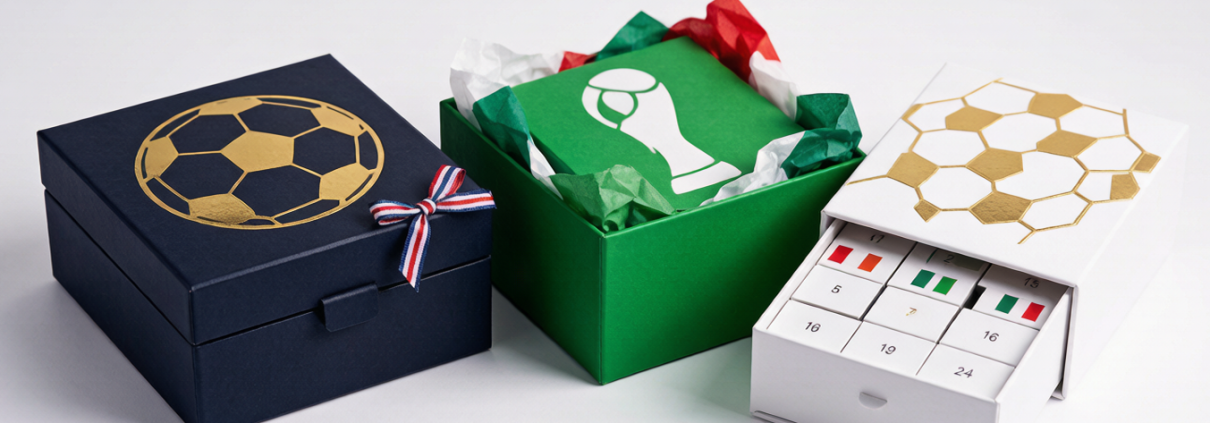
World Cup 2026 Corporate Gift Packaging: Complete Guide for Brands
The FIFA World Cup 2026™ is already underway — 48 teams, 104 matches, and an estimated 5 billion global viewers. For brands and B2B companies, that kind of cultural moment creates a rare alignment: your clients and partners are all watching, feeling, and sharing the same experience at the same time.
Corporate gifting during the World Cup isn’t a gimmick. It’s strategic brand investment in a moment of peak emotional engagement. A thoughtfully packaged World Cup gift box lands on a desk during a week when your client is already talking about football — it’s contextual, timely, and memorable in a way that a standard “thank you” hamper simply cannot replicate.
This guide is written for marketing managers, procurement teams, and brand managers who want to execute a World Cup 2026 corporate gifting program — from concept to delivery — efficiently and cost-effectively.
27% Higher response rate in follow-up sales after a physical gift
70% Better retention vs. email: branded physical packaging stays longer
5B+ World Cup viewers — peak emotional engagement window
37 days Remaining tournament window to capitalize on (until July 19)
Table of Contents
- Why Corporate Gifting Works During World Cup
- Who to Send Gift Boxes To
- Gift Box Tiers & Budget Guide
- Design Principles for Corporate Packaging
- Contents Recommendations by Audience
- Personalization & Variable Data Printing
- Logistics: Production & Delivery Timeline
- 4 Mistakes That Kill Corporate Gift ROI
- Frequently Asked Questions
1. Why Corporate Gifting Works During the World Cup
Most corporate gifts arrive in a vacuum — a generic hamper at year-end, indistinguishable from the 10 others your client received that week. World Cup gifts are different. They arrive with built-in cultural context.
When you send a beautifully packaged World Cup gift box on the day of a major match, three things happen that don’t happen with ordinary gifting:
- Immediacy: The gift is relevant right now, not “whenever you get around to opening it.” The recipient knows exactly why it’s there.
- Social sharing: Sports emotion and beautiful packaging combine into a highly shareable moment. Unboxing a premium World Cup gift set in the office generates organic conversation.
- Emotional anchoring: Your brand becomes associated with the positive emotions of the tournament. When your client remembers that incredible match, they’ll also remember your gift.
- Key Insight: The most impactful timing windows are Round of 16 (June 28 – July 2), Quarterfinals (July 4–5), and Finals Week (July 15–19). Target delivery to coincide with match days for your client’s country or favorite team.
2. Who to Send Gift Boxes To
Before you budget and design, identify your target recipients. World Cup corporate gifts work across multiple audiences, each requiring a different approach:
| Recipient Group | Gifting Goal | Recommended Tier | Timing |
|---|---|---|---|
| Key Clients / Accounts | Relationship deepening, renewal momentum | Premium ($50–$80/box) | Round of 16 / Quarterfinals |
| Prospective Clients | Pipeline acceleration, brand recall | Mid-range ($20–$40/box) | Tournament kickoff / Group stage |
| Business Partners | Partnership appreciation, co-promotion | Mid-range ($25–$50/box) | Any major match week |
| Employees | Morale boost, brand culture | Budget-friendly ($10–$25/box) | Tournament kickoff |
| Influencers / Media | Content seeding, organic reach | Premium ($60–$100/box) | Kickoff or First match week |
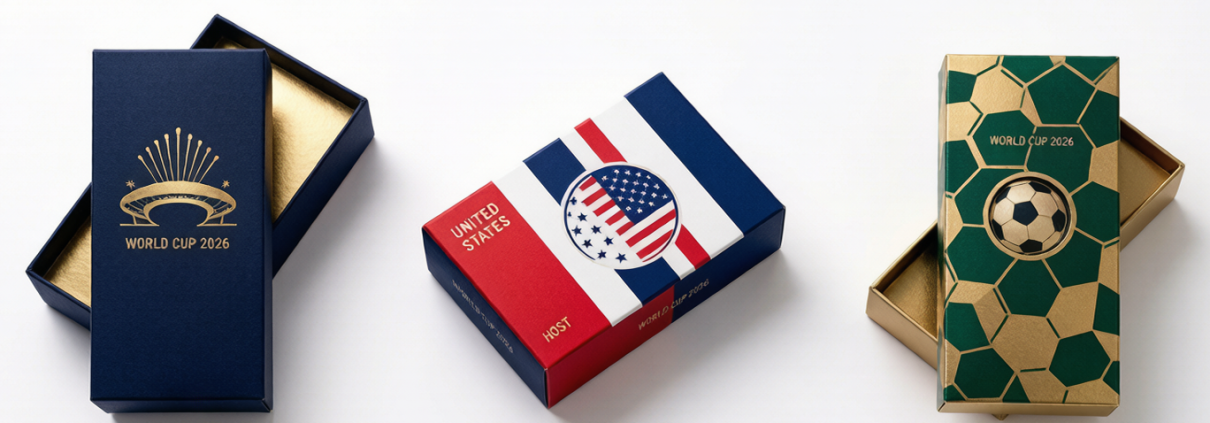
Pro Tip: For key clients in host countries (USA, Canada, Mexico), consider country-specific packaging — a red-white-blue box for US clients, a green-white-red box for Mexican partners. This hyper-local personalization shows cultural awareness and dramatically increases the emotional impact.
3. Gift Box Tiers & Budget Guide
Corporate gift boxes exist across a wide price range. Here’s a practical framework based on 2026 supplier pricing and contents cost:
🥇 Premium Tier
Per box, incl. contents at 500+ units
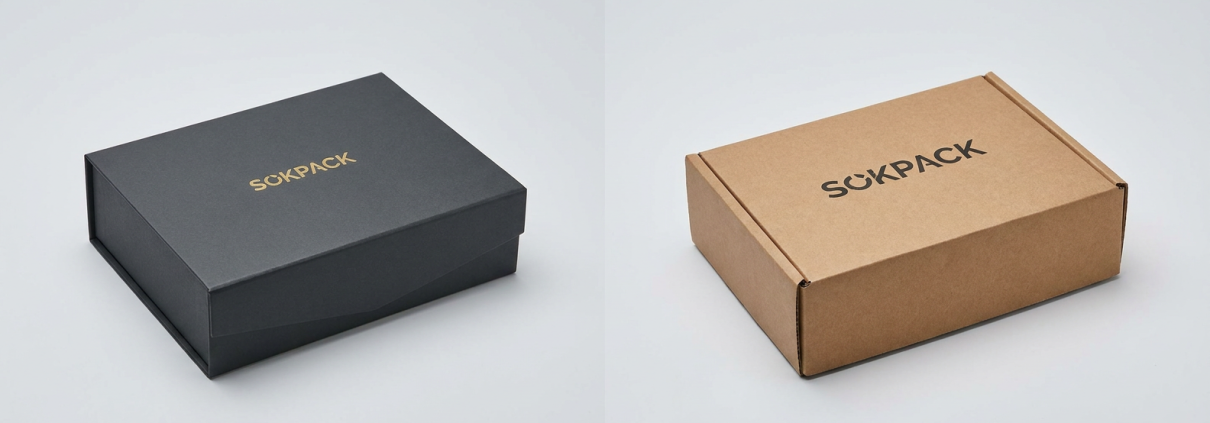
- Rigid magnetic lid box with foil stamping
- Soft-touch lamination + embossed logo
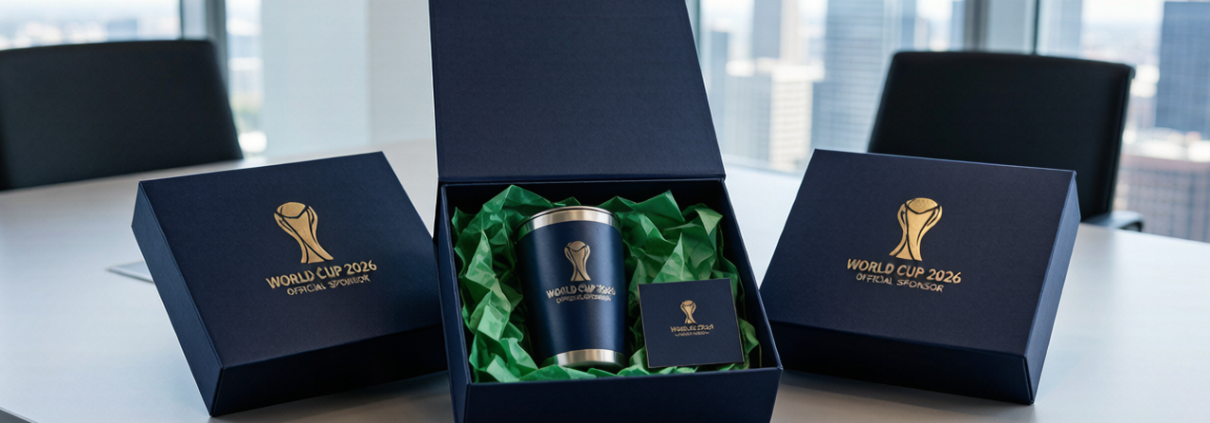
- Premium insulated tumbler
- Artisan chocolate set
- Branded notebook + pen set
- Enamel keepsake pin
- Personalized message card
🥈 Mid-Range Tier
Per box, incl. contents at 500+ units
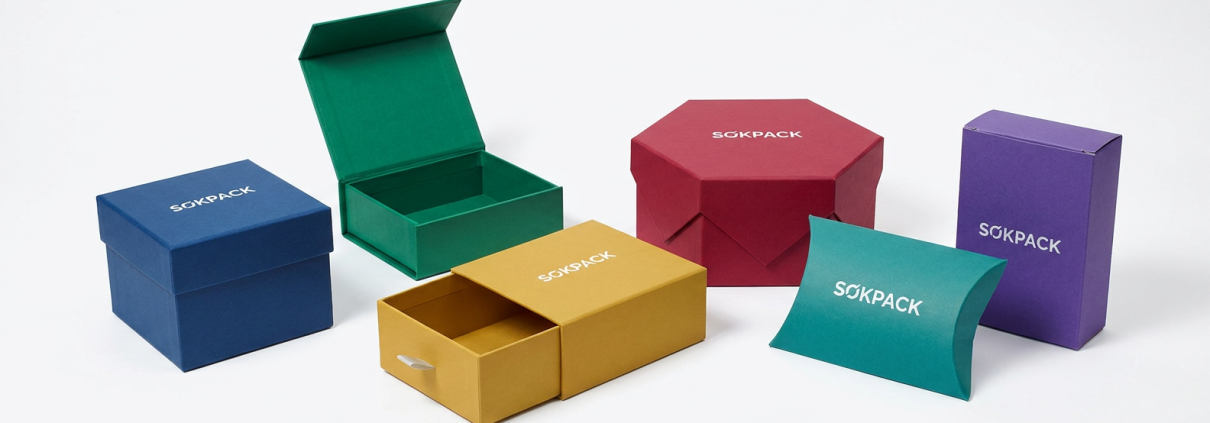
- Rigid box with matte lamination
- Spot UV logo accent
- Branded ceramic mug
- Snack or candy set
- Branded tote or cap
- World Cup schedule card
🥉 Budget Tier
Per box, incl. contents at 1,000+ units
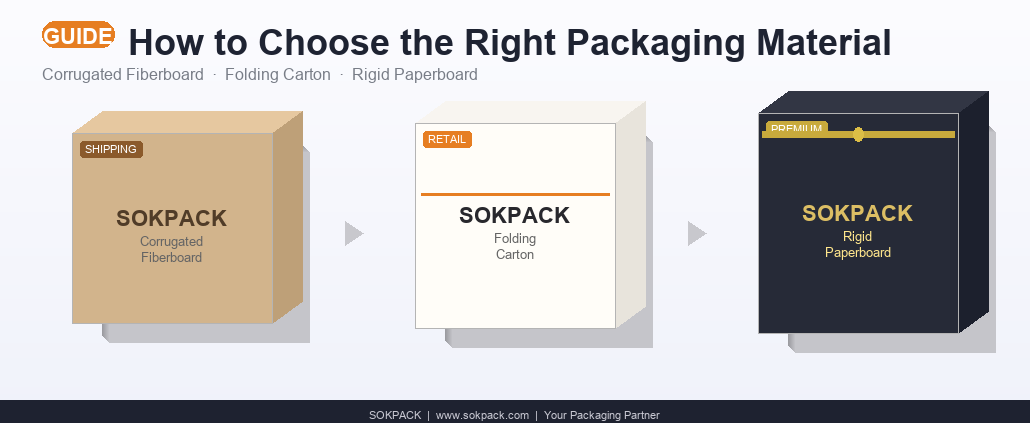
- Folding carton or kraft box
- Branded glossy sleeve
- Football-themed chocolates or candy
- Branded cap or bandana
- Mini stationery set
Total Program Budget Estimation
| Recipients | Budget Tier Total | Mid-Range Total | Premium Total |
|---|---|---|---|
| 100 boxes | $1,000–$2,000 | $2,000–$4,500 | $5,000–$10,000 |
| 500 boxes | $5,000–$10,000 | $10,000–$22,500 | $25,000–$50,000 |
| 2,000 boxes | $20,000–$40,000 | $40,000–$90,000 | $100,000–$200,000 |
4. Design Principles for Corporate Gift Packaging
Corporate gift boxes have one primary design constraint that consumer packaging doesn’t: the brand must be visible, but the gift must not feel like advertising. Here’s how to get that balance right:
Rule 1: Logo Prominence Without Dominance
Your company logo should appear on the exterior lid and at least one interior surface, but it shouldn’t overwhelm the World Cup theme. A good ratio: 30% brand identity, 70% World Cup mood. This feels like a gift, not a promotional item.
Rule 2: Match Energy Drives Color Choice
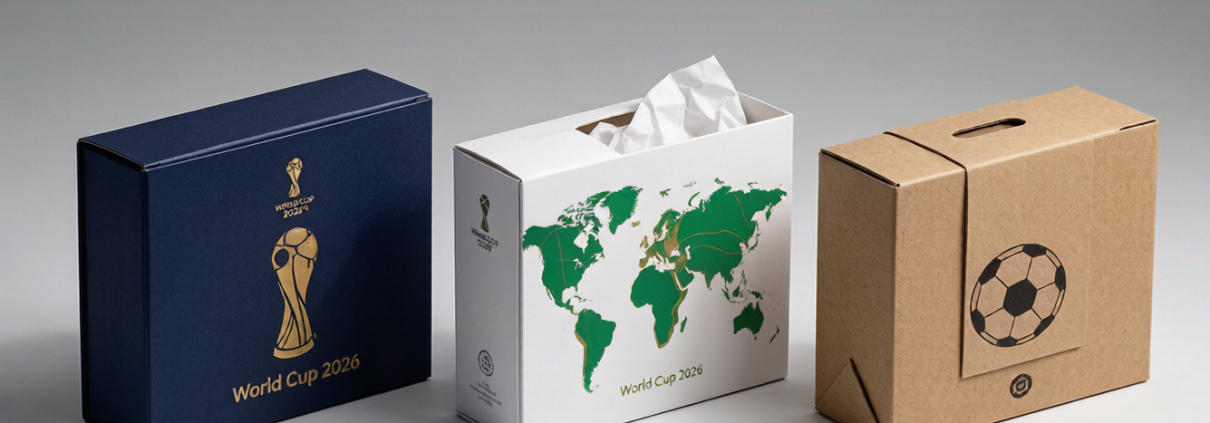
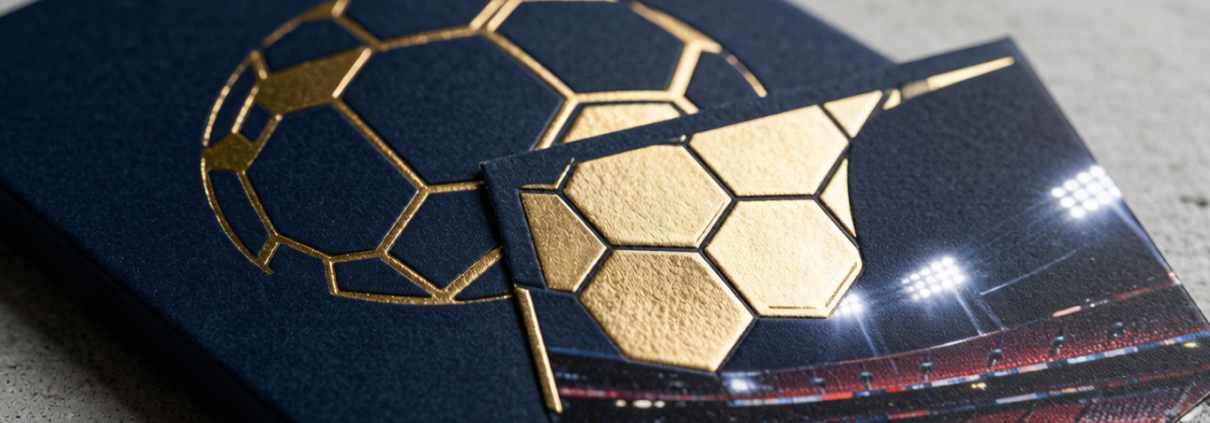
Use football’s energy palette — deep pitch green, trophy gold, stadium night navy, or host nation colors — as your background canvas. Overlay your brand colors as accents rather than the dominant color. A navy box with gold foil and your logo in white feels premium and football-right simultaneously.
Rule 3: Texture Tells the Story
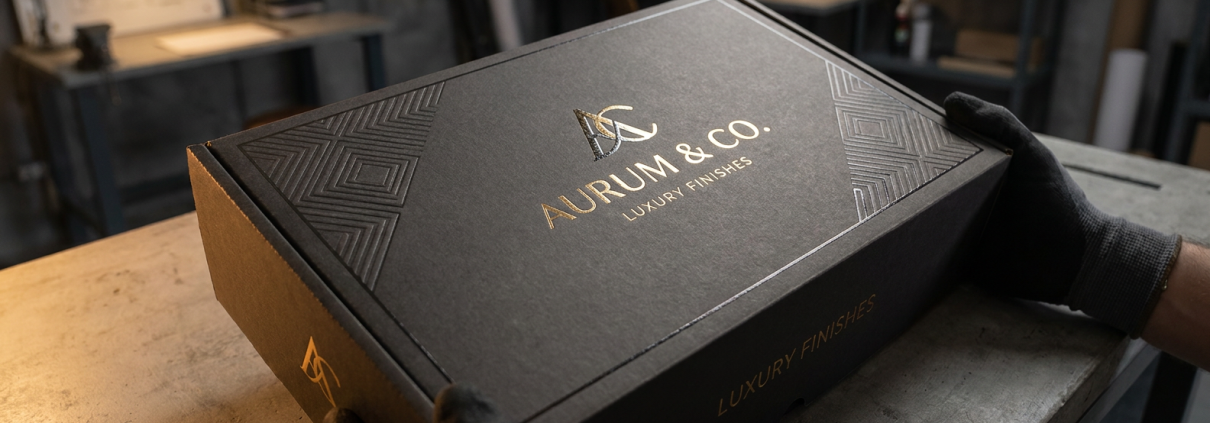
For premium recipient tiers, the tactile experience matters as much as the visual. Soft-touch matte lamination makes a box feel intentional. Combine with an embossed logo on the lid — the moment your client picks up the box and feels the quality, before they’ve even opened it, they’ve received a message about how you value the relationship.
Rule 4: Interior Matches Exterior
Don’t let the interior contradict the exterior. If the box is premium, the interior lining, tissue color, and insert material must match. Standard checklist: custom-color tissue paper, branded ribbon pull, foam or molded pulp insert in team colors, and a card printed to match the exterior palette.
Design Direction: The most universally effective corporate World Cup box for 2026 is a deep navy rigid box with gold foil World Cup trophy silhouette on the lid, soft-touch matte exterior, white embossed company logo on the side panel, and green tissue paper interior. Works for any client, any industry, any country.
5. Contents Recommendations by Audience
The contents of your gift box should reflect what your recipient will use, display, or consume — not what’s cheapest to source. Here’s a curated guide by recipient type:
For C-Suite Executives (Premium)
- 🥃 Premium branded whiskey glass set or wine glasses (2 pieces)
- 🍫 Single-origin artisan chocolate box, football-panel print wrap
- ⌚ Leather-bound desk set (cardholder + notepad + pen)
- 🏆 Replica World Cup trophy desk miniature (branded base)
- ✉️ Handwritten personalized card from your CEO
For Marketing & Creative Teams (Mid-Range)
- ☕ Branded specialty coffee set with World Cup packaging
- 📓 A5 hardcover notebook with foil logo
- 🎨 Limited edition branded tote bag
- 🍬 Colorful candy mix in team colors (US/Mexico/Canada)
- 📱 Branded PopSocket or phone stand
For Large Workforce Distributions (Budget-Friendly)
- 🧢 Branded cap or fan bandana
- ⚽ Mini foam football
- 🍭 Football-shaped chocolates (3–5 pieces)
- 📋 World Cup bracket card (fill-in predictions)
- 🎉 Branded sticker pack
6. Personalization & Variable Data Printing
The most powerful upgrade for corporate gift boxes is personalization — and modern manufacturing makes it more accessible than most procurement managers realize.
Here are three levels of personalization, from basic to advanced:
- Recipient Name Card (Most Common): Print a personalized “Dear [Name]” card for each box using variable data digital printing. Supply the factory with a spreadsheet; they produce individual cards. Cost: $0.30–$0.80/unit extra. Maximum emotional impact for minimum cost.
- Regional Box Variants (Intermediate): Print 2–3 exterior box variants aligned to recipient locations. USA clients get red-white-blue boxes; Mexico contacts get green-white-red. Requires 2–3 separate SKUs but is manageable at 200+ units per variant.
- Fully Custom Per-Box Printing (Advanced): Digital printing allows true one-off customization — recipient name, company name, or even a personalized message on the box exterior itself. Typically feasible at 100+ units with digital printing partners. Cost premium of $1.50–$3.00/unit but creates extraordinary differentiation.
Low-Cost High-Impact Hack: Even for standard printed boxes, add a QR code on the interior base that links to a personalized video message from your team. Record one per major client segment (e.g., “For our North America partners” / “For our friends in Europe”). Cost: $0. Impact: unforgettable.
7. Logistics: Production & Delivery Timeline
With the World Cup running until July 19, 2026, here’s a realistic production and delivery roadmap starting from today, June 12:
| Action | Timeline | Notes |
|---|---|---|
| Brief finalization + supplier quote | June 12–14 | Define structure, size, qty, design direction |
| Design approval + dieline confirmation | June 14–17 | Most factories provide template within 24hrs |
| Digital 3D mockup approval | June 17–18 | Skip physical sample to save time |
| Rush production (folding carton) | June 18 – July 2 | ~15 days; +15% rush fee typical |
| Rush production (rigid box) | June 18 – July 8 | ~20 days; +20% rush fee typical |
| Air freight to USA / Europe | +5–7 days after production | Add 2–3 days for customs |
| Expected arrival (rigid box) | July 13–16 | In time for the FIFA World Cup Final (July 19) 🏆 |
Don’t wait: Every day of delay is one day less tournament window. If you want boxes for the Quarterfinals (July 4–5), you need production confirmed by June 16 for folding cartons or June 13 for rush rigid boxes. Contact your packaging supplier today.
8. Four Mistakes That Kill Corporate Gift ROI
Mistake 1: Generic Contents in Premium Packaging
A $15 box of chocolates in a $7 rigid box sends a mixed message. Align contents quality with packaging quality. If your box is premium, every item inside must feel premium too — even if that means fewer items.
Mistake 2: Forgetting the Interior Experience
Most procurement managers approve the box exterior and forget about the interior. But when your client opens the box, the interior is the first thing they see. White tissue and brown inserts in a beautiful navy box feel like a let-down. Budget 10–15% of your packaging cost for interior tissue, insert, and card quality.
Mistake 3: Ordering Too Early Without Flexibility
Ordering 2,000 boxes identical to each other, then realizing three weeks in that you want to add 500 for a new client segment — is expensive. Order your core batch, but reserve 10–15% of production capacity as flex stock (plain or semi-customized boxes you can quickly finish).
Mistake 4: No Distribution Plan
The box is ready, sitting in a warehouse. Now what? Building the distribution logistics (courier accounts by country, recipient data, address verification, customs documentation for international sends) is a project unto itself. Start planning distribution as soon as production is confirmed.
Frequently Asked Questions
Launch Your World Cup Corporate Gift Program Today
SOKPACK’s team can deliver a 3D mockup and full quote within 24 hours. Rush production available — the final is July 19. Let’s make it happen.